September 02, 2016 5:57 PM

  • Lisa Schlein

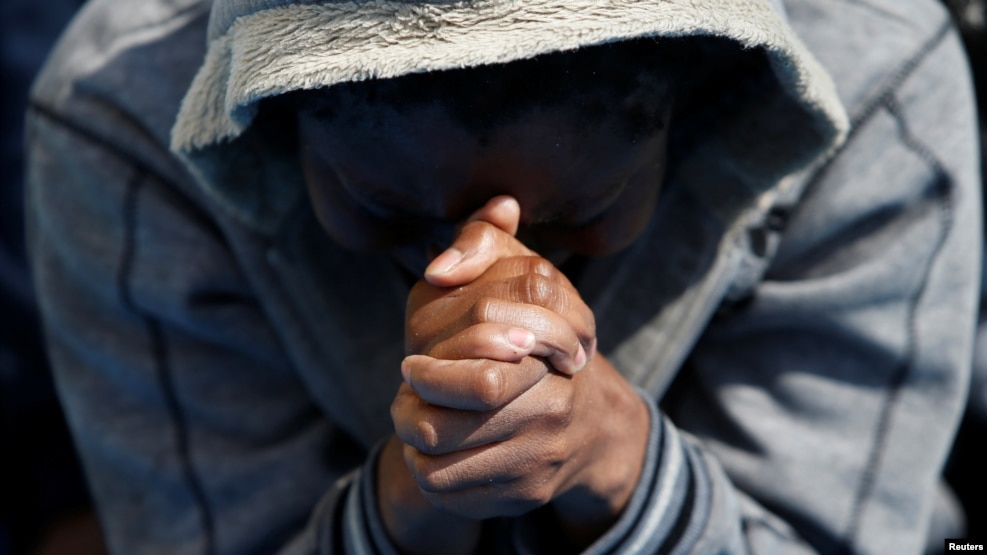
A migrant prays on the Migrant Offshore Aid Station ship Topaz Responder after being rescued around 20 nautical miles off the coast of Libya, June 23, 2016.

A migrant prays on the Migrant Offshore Aid Station ship Topaz Responder after being rescued around 20 nautical miles off the coast of Libya, June 23, 2016.

The U.N. refugee agency estimates nearly 4,200 people have died or gone missing in the Mediterranean Sea since Alan Kurdi’s lifeless body washed ashore on a Turkish beach one year ago. During the first eight months of this year, the agency reports, more than 280,000 people have made the treacherous sea crossing to Europe.

The number of arrivals in Greece has practically dried up, following the implementation of a European Union-Turkey accord under which migrants are prevented from leaving Turkish shores. But the numbers leaving Libya for Italy remain high.

UNHCR spokesman William Spindler said Friday that the change in the migratory pattern had caused a spike in the number of casualties.

“So far this year, one person has died for every 42 crossings from North Africa to Italy, compared to one in every 52 last year," he said. "This makes 2016 to date the deadliest year on record in the central Mediterranean. The chances of dying on the Libya-to-Italy route are 10 times higher than when crossing from Turkey to Greece.”

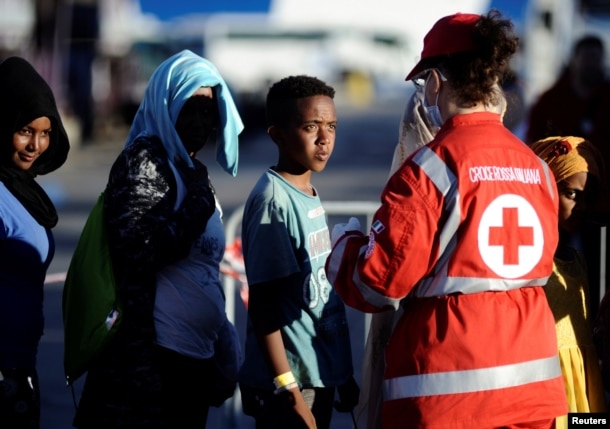
Migrants stand in a line in front of Red Cross member after disembarking from the Italian navy ship Borsini in the Sicilian harbor of Palermo, southern Italy, July 20, 2016.

Migrants stand in a line in front of Red Cross member after disembarking from the Italian navy ship Borsini in the Sicilian harbor of Palermo, southern Italy, July 20, 2016.

Legal pathways

Spindler said these dangers reinforce the urgent need to increase legal pathways for refugees to seek asylum in European countries. These, he said, could involve resettlement or private sponsorship, family reunification and student scholarship schemes.

Meanwhile, the U.N. Children’s Fund estimated that 500,000 refugee and migrant children had fallen prey to smugglers. The agency said people smuggling and human trafficking were now estimated to be worth up to $6 billion annually.

UNICEF spokeswoman Sarah Crowe told VOA that children, especially unaccompanied youngsters, who use smugglers to reach European countries of destination were very vulnerable to exploitation.

“It may mean that they have to pay off their debts in favors, in exploitative services, such as labor, sexual prostitution, sexual exploitation and so on," she said. "But sometimes, just out of desperation, they will fall into the hands of other criminals, organized crime, et cetera.”

To help protect refugee and migrant children, UNICEF is calling for greater efforts in tracking and documenting smuggling and trafficking networks that target children on the move.

Source=http://www.voanews.com/a/death-toll-among-refugees-crossing-mediterranean-highest-ever/3491811.html

Saturday, 03 September 2016 11:03

How Eritrea became a major UAE base

Written by

/

This fascinating article from the War on the Rocks website provides some important insights into the involvement of Eritrea in the Gulf’s military ambitions.

Martin


 West of Suez for the United Arab Emirates

September 2, 2016

UAE base AssabBases on the Horn of Africa serve Emirati power projection ambitions.

Britain militarily withdrew from areas “east of Suez” in 1971, triggering the Trucial States to form today’s United Arab Emirates. Now, 45 years later, this Arab country is increasingly focused on projecting military power “west of Suez.” Events such as the Arab Spring in 2011, Iran’s growing confidence and escape from nuclear sanctions, plus the rise of the Islamic State have convinced Emirati leaders to become more activist in managing the risks facing their federation. Most recently this has resulted in this tiny Gulf nation establishing its first power projection base outside of the Arabian Peninsula in the Eritrean port of Assab. Over the last year, this port was built up from empty desert into a modern airbase, deep-water port, and military training facility.

The progression of Emirati expeditionary operations is fascinating to retrace. In the 1980s and 1990s, the Emirates sent de-mining forces to Lebanon, peacekeepers to Somalia, and Apache attack helicopters to the NATO intervention in Kosovo. In the 2000s, the United Arab Emirates provided fully-armed attack helicopters to Lebanon and equipped Yemeni government forces with armored vehicles and weapons to fight the Houthi rebellions in the north of that country. An Emirati special forces and stabilization force spent 12 years in Afghanistan as part of the NATO International Security Assistance Force (ISAF).

After the 2011 Arab Spring, the United Arab Emirates sent its troops alongside the Saudi military to stabilize the Bahraini capital of Manama. In parallel with a domestic crackdown on Muslim Brotherhood elements in the Emirates, their military intervened in Libya to support nationalist and tribal militias against the regime of Muammar Qadhafi, Salafi militants, and –most recently – the Tripoli-based Islamist coalition Libya Dawn. The United Arab Emirates welcomed the 2013 military coup that evicted the Muslim Brotherhood government in Egypt and has since worked to tighten military relations with Cairo, including joint airstrikes within Libya from Egyptian airbases, naval exercises, and the provision of U.A.E.-owned IOMAX AT-802U counter-insurgency aircraft to Egypt’s campaign against the Islamic State in Sinai.

In the Red Sea: Djibouti’s loss, Eritrea’s gain

Next the Emirates turned towards the Horn of Africa and Indian Ocean. This process was driven by their strident intervention in Yemen, which began when Yemeni President Abdu Rabu Mansour Hadi was ousted from Aden by Houthi rebels and subsequently requested military intervention citing Article 51 (self-defense) of the Charter of the United Nations and also the Charter of the Arab League. On March 26, Saudi Arabia announced the beginning of Operation Decisive Storm, the pan-Arab military operation to halt the advance of Yemen’s Houthi militia.

Saudi Arabia and the Emirates initially sought to use Djibouti, just across the Gulf of Aden, to support the liberation of Aden, but a twist of fate intervened. In late April 2015, an altercation between the chief of the Djibouti Air Force and Emirati diplomats derailed relations between the two countries. There were actually fisticuffs after an Emirati aircraft taking part in the Gulf Coalition operations over Yemen landed without authorization at Djibouti-Ambouli International Airport. Emirati Vice Consul Ali al-Shihi even took a punch, setting off a diplomatic spat. The dispute escalated quickly due to pre-existing tensions concerning a long-running legal dispute over the contract for the Doraleh Container Terminal, the largest container port in Africa, operated by Dubai Ports World, the Dubai-based Emirati port operator and one of the biggest U.A.E. soft-power assets. On May 4, 2015 the United Arab Emirates and Djibouti formally broke off diplomatic relations. Djibouti evicted Saudi and Emirati troops from a facility at Haramous adjacent to Camp Lemonnier. This former French Foreign Legion outpost (used by U.S. Africa Command and Combined Joint Task Force-Horn of Africa) also had been leased to the Gulf coalition in early April to support its operations in Yemen.

But Saudi Arabia and the United Arab Emirates had an on-hand replacement: neighboring Eritrea, Djibouti’s regional rival, which boasts rudimentary ports on the Red Sea just 150 kilometers further north. On April 29, the very day that Djibouti evicted Gulf troops, Eritrean President Isaias Afewerki met with Saudi Arabia’s King Salman bin Abdel Aziz and concluded a security and military partnership agreement with the Gulf states offering basing rights in Eritrea. High-level delegations from the Gulf Cooperation Council had already met Eritrean officials that year to discuss using Eritrea as potential base for operations. This insurance policy paid dividends: potentially crippling strategic risk in the anti-Houthi campaign – the loss of Djibouti – was overcome with ease and within days.

Build-up at Assab

As part of the partnership agreement, the United Arab Emirates concluded a 30-year lease agreement for military use of the mothballed deep-water port at Assab and the nearby hard-surface Assab airfield, with a 3,500-meter runway capable of landing large transport aircraft including the huge C-17 Globemaster transports flown by the Emirati air force. The Gulf states agreed to provide a financial aid package and undertook to modernize Asmara International Airport, build new infrastructure, and increase fuel supplies to Eritrea.

The early operations at Assab were hasty but effective. On April 13, a CH-47 Chinook carried an eight-man team of Emirati Presidential Guard special operators and Joint Terminal Attack Controllers (JTACs) into the Little Aden peninsula, the site of Aden’s refinery and oil storage tanks. These forces called in airstrikes and naval gunfire missions, enabling forces loyal to President Abdu Rabu Mansour Hadi and local Aden popular resistance committees to hang onto two defensive pockets with their backs to the sea. Emirati landing ships dropped Saudi and Emirati security forces and U.A.E.-trained local militias mounted into the defensive pockets in May.

The naval lifeline sustained by Assab port and airbase allowed the pro-Hadi forces to retake Aden in August 2015’s Operation Golden Arrow. Emirati landing ships and chartered commercial vessels made repeated runs between the new Emirati naval base at Fujairah on the Gulf of Oman and the bare-bones Assab port. U.A.E. Air Force C-17s and C-130s were also seen at Asmara International Airport in the Eritrean capital. By late July 2015, the buildup at Assab airfield was complete, with the base serving as a logistics support area and staging hub for the brigade-sized Emirati armored battlegroup that would spearhead the Aden breakout. This was composed of two squadrons of Leclerc main battle tanks, a battalion of BMP-3 infantry fighting vehicles, and two batteries of G6 howitzers. The Emirates also shipped a 1,500-man strike force of U.A.E.-trained Yemeni troops mounted in U.A.E.-provided armored vehicles after they were trained and equipped at Assab.

In mid-July 2015, the Emirati battlegroup began landing at the Little Aden oil terminal. Emirati Al-Futaisi-class landing ships and other landing craft including the Swift, a former U.S. Navy vessel, made repeated runs between Assab port and Aden. In October and November 2015, Assab served as the logistics hub for the deployment of three 450-man Sudanese mechanized battalions to Aden. The two Sudanese battalions undertook a lengthy route movement from Kassala on the Sudan-Eritrea border to Assab port and were shuttled across to Aden by U.A.E. vessels. Assab port also served as the base for the Gulf naval blockade of the Red Sea ports of Mokha and Hodeida, with several Emirati navy vessels including new Baynunah-class corvettes and Rmah-class logistics vessels docking at the port through late 2015 and 2016. Since the offensive against al-Qaeda in the Arabian Peninsula (AQAP) in Hadhramout in April 2016, Assab has also served as a transshipment hub for Emirati vessels delivering humanitarian aid and reconstruction materials, including generators and fuel to Mukalla.

A major aerial hub and training base

Significant expansion of Assab airfield has turned the site from an austere forward operating location into a powerful expeditionary base, the first Emirati power projection site outside the federation’s homeland. Emirati forces doubled the airfield’s available tarmac space +Eritrea/@13.0757788,42.644258,429m/data=%213m1%211e3%214m5%213m4%211s0x1619cf977d5236a3:0x7fcd15390d06bafe%218m2%213d13.0139405%214d42.7369299">and built an air traffic control tower and new hangars.

By early 2016, the airfield was hosting several Apache attack helicopters of the Emirati Joint Aviation Command as well as Presidential Guards’ Special Operations Command Chinook, Black Hawk, and Bell 407MRH helicopters conducting operations over southwest Yemen. In November 2015, AT-802 ground attack turboprops of the UAE Special Operations Command’s Aviation Group 18 also began flying strike sorties across the Bab al-Mandeb Strait from Assab. New Yemeni air corps pilots trained on U.A.E.-donated aircraft at Assab prior to their transfer to Al-Anad Air Base to the north of Aden in October 2015.

A huge containerized housing and tent city were also built as the base was developed for Yemeni counterterrorism forces being trained and equipped by the United Arab Emirates to liberate southern Yemeni cities such as Mukalla held by AQAP. Units of the Aden counterterrorism force and Hadhramout Tribal Confederation mobile infantry were flown into Assab to be trained and equipped by the UAE. The scale and speed of the training effort is impressive: new units trained using UAE-provided tactical vehicles before being transported back into Aden for the anti-AQAP offensive that kicked off in May. A mixed battalion-sized U.A.E. battlegroup +Eritrea/@13.0687454,42.6556198,429m/data=%213m1%211e3%214m5%213m4%211s0x1619cf977d5236a3:0x7fcd15390d06bafe%218m2%213d13.0139405%214d42.7369299">remained based at Assab throughout the spring and summer of 2016, allowing U.A.E. troops from the similarly-sized battlegroup engaged in operations against AQAP in Yemen to rotate to a nearby rest and recuperation site.

In late 2015, the United Arab Emirates also began constructing new deep-water port facilities on the coast directly adjacent to Assab airfield, removing the need for U.A.E. military convoys to transit through Assab city as they travelled from the airbase to the port ten kilometers to the south. The U.A.E. National Marine Dredging Company’s dredging vessels began work in late 2015. By May 2016, a 60,000 square meter square of coastline had been excavated and dredged, and a 700-meter pier built. Emirati forces also extended a security perimeter around the airfield and port facilities and re-routed the P-6 coastal highway between Assab and Massawa around the outer perimeter of the base.

The growing Horn of Africa footprint of the United Arab Emirates

Though Saudi Arabia and the United Arab Emirates have cooperated in major security ventures such as the Manama intervention in 2011 and the Yemen war since 2015, the two leading Gulf Cooperation Council military powers are also competitors. In terms of population, oil production, and defense spending, Saudi Arabia is by a considerable margin the larger of the two, but the Emirates are determined to punch well above their weight. In Yemen, the objectives of the two Gulf States are slowly diverging, with the Saudis backing Islamist militias against the Houthis in the north, whilst the United Arab Emirates is focused on countering AQAP in the south of the country.

In the Horn of Africa region there are signs of competition as well. Saudi Arabia patched things up with Djibouti by October 2015, with Saudi access restored to the airfield at Camp Lemonier and with Djibouti receiving Saudi-donated patrol boats, helicopters, weapons, and ambulances. In March 2016, discussions were underway between Riyadh and Djibouti for the signing of comprehensive bilateral security agreement including the return of a long-term Saudi military base to Djibouti.

The Emirates appear to be adopting a broader-based approach to the Horn of Africa, East Africa, and Indian Ocean region. Abu Dhabi has long been a generous benefactor and investor in the Indian Ocean island-states such as the Seychelles, Maldives, Mauritius, Madagascar, and the Comoros. In these areas the large Emirati investment banks and foundations have supported tourism, ports, and humanitarian projects. The United Arab Emirates is interested in East Africa also, with natural gas, ports, and food security in mind. To support the development of a broader Indian Ocean and East Africa policy the United Arab Emirates is getting drawn into security cooperation relationships with a range of Horn of Africa states, aiming to reduce instability and the growth of Islamist militias in the region.

Somalia is a case in point. In early May 2015, the United Arab Emirates expanded its long-running train and equip partnership with Somalia’s counterterrorism unit and National Intelligence and Security Agency (NISA), opening a new U.A.E.-funded training center in Mogadishu where Emirati special forces operators have trained several units of Somali commandos. In late May 2015, the Emirates supplied the Interim Jubba Administration at Kismayo with a batch of RG-31 Mk. V MRAPs and Toyota Land Cruisers. These were followed in June by a shipment of Reva Mk. III armored personnel carriers, water tanker trucks, and police motorcycles for the Somali federal government’s Ministry of Internal Security and Police. In October 2015, the United Arab Emirates pledged to pay the salaries of the Somali federal government security forces over a four-year period.

The United Arab Emirates has also wooed Somalia’s regional rival, the autonomous Somaliland region. In May 2016, Dubai Ports World won a 30-year contract to manage the port of Berbera and expand it into a regional logistics hub, breaking up Djibouti’s virtual monopoly on Ethiopian freight via the Doraleh Container Terminal through the joint development by Somaliland and Ethiopia of the Berbera Corridor as an alternative logistics route. The United Arab Emirates is also said to be seeking access to the Berbera port and airstrip to support its operations in Yemen, and may provide Somaliland with a financial aid package and an Emirati-built military training center.

In Puntland, an autonomous region in northeastern Somalia, the United Arab Emirates also paid for the Puntland Maritime Police Force to be established in 2010, with anti-piracy training provided by a succession of private security companies, a cause for some controversy. The PMPF operates bases in Bosaso, Puntland’s primary port on the Gulf of Aden coast, and Eyl on the Indian Ocean coast. The PMPF air wing operates three UAE-donated Ayers S2R Thrush aircraft and an Alouette III helicopter. The UAE also finances and trains the Puntland Intelligence Agency. When the Gulf Coalition naval blockade sought to interdict Iranian weapons smuggling to the Houthis, the Emirati investment in Puntland and Somaliland seems to have paid off, shutting off known Iranian transshipment points like Bosaso and Berbera.

The UAE’s “west of Suez” moment?

In combination with the development of a closer military relationship with Egypt and Sudan, the construction of a major decades-spanning power projection base in Eritrea will give the United Arab Emirates a leading role in the protection of the Suez and Bab el-Mandab sea-lanes. The United Arab Emirates could begin to emerge as a powerful actor in the Horn of Africa, East Africa, and western Indian Ocean. Like prior trading empires from the Portuguese to the Omanis, the United Arab Emirates is aiming to become an important player up and down Africa’s eastern seaboard, mixing hard military power with soft-power approaches.

The development of large and well-armed Yemeni forces at the Assab base also points to a second way that the United Arab Emirates could become a major influence on the local balance of power. Within just a few months the United Arab Emirates trained and equipped a few thousand mobile infantry mounted in MRAPs and armed with advanced anti-tank weaponry. In many regional conflicts, battles are regularly won by such compact and cohesive forces backed by external airpower and special forces. This could have implications for the struggle against local extremist groups like Al-Shabab, which the United Arab Emirates may turn its sights on in the future. Other regional conflicts and civil wars could be influenced by Emirati security cooperation, particularly the Emirates’ ability to gift significant numbers of modern vehicles and weapons to proxy forces. The United Arab Emirates could begin to play a kingmaker role across the region.

A final implication could be the strengthening of the Emirati deterrent posture against Iran. The Yemen intervention was indirectly aimed at Iran, an effort by the Gulf states to prevent what they view as an Iranian-backed Houthi movement from taking over Yemen. The Emirati naval and air base at Assab was critical in blockading the Houthi-held ports on the Red Sea and preventing Iran from resupplying the rebels. Over the last couple of years there has been a growing clamor regarding the potential for Iran to develop “blue water” naval capabilities that might allow Tehran to project military power into the western Indian Ocean and Red Sea. In fact, it is the UAE that has achieved this first, creating the base infrastructure to sustain operations by muscular surface combat platforms like the Baynunah-class corvettes.

In addition to contesting Iranian naval expansion, bases like Assab could contribute to the United Arab Emirates’ strategic depth in an eventual clash with Iran, threatened or actual. Whereas the entire Emirati homeland’s littoral is within the range of Iranian missiles, Assab provides depth that might allow a reserve force of Emirati surface combatants, aircraft, and even submarines to remain active and able to interdict Iran’s coastline and shipping during an extended war.

The Emirates’ track record of involvement in expeditionary operations has been rather formless in the past, pointing towards the federation’s keenness to simply “get involved” in different types of operations in many parts of the Islamic world without necessarily serving any broader strategic roadmap. Although evolved out of military necessity to support the Yemen war, the development of Assab might mark the beginning of a more purposeful, considered phase of Emirati military expansion.

Alex Mello is lead security analyst at Horizon Client Access, an advisory service working with the world’s leading energy companies.

Michael Knights is the Lafer Fellow at the Washington Institute for Near East Policy. He has worked in the Gulf States and Yemen as an advisor to local security forces and as an analyst of regional conflicts including Yemen’s wars against the Houthis, southern secessionists and AQAP.

Source=https://martinplaut.wordpress.com/2016/09/02/how-eritrea-became-a-major-uae-base/

Things change and life goes on. It is inevitable because change is the natural law and order of life. A person has to look not only the past and present but it is also essential for the person to see what and how change has to happen in the future. As Winston Churchill said, “To improve is to change, to be perfect is to change often.” If we don’t change, we don’t grow and if we don’t grow, we cannot say that we are really living in this changing world. As Barack Obama said, “Change will not come if we wait for some other person, or for some other time. We are the ones we have been waiting for. We are the change that we seek.” In other words, we must be the change that we wish to see in ourselves, households, community, religious institutions, and generally in our society. If we do not change the direction in which we are heading, we may end up walking into the same situation where we were, with no change or growth. Our attitude and way of thinking determine the kind of change we expect to observe in our lives. Those people who cannot change their attitudes and perspectives cannot change anything else. We have to be the change to make the necessary change in our Eritrean society in Diasporas.

If a situation is bad, it has to change to a better situation. To create a better situation, an effort has to be made, or a struggle has to take place, to make the change. However, any change, even a change for the better, is always accompanied by drawbacks and obstacles. There is always some discomfort, resentment, and struggle in the process of making the desired change. If there is no struggle, there can be no change and progress. It is evident that some of us do not like change because we don’t like to take risks. We have to take calculated risks because not doing so is the greatest risk of all. We need to embrace change, particularly if the alternative is disastrous and counter-productive. In most instances, only the ultra-opportunists and ignorant people never change. If the struggle for a change is supported by the people affected – by making them actively participate in the process starting from the initial stage – making the change will involve minimal problems. The following story, adopted from our Tigrigna traditional folk tales, narrates the need for change in a dreadful and life-threatening situation. The story is slightly modified in order to fit and convey the desired message.

Once upon a time, a great number of mice used to live in holes around a farm house. The farm was raising livestock and producing a variety of crops. The mice ate the fresh, tasty wheat, corn, oats, and left over food of rice, bread, cheese and biscuits that were kept in the farm house. They were having a great time and living easy, comfortable lives, as they grew fatter day by day. One day a certain unexpected crazy cat came to the farm house and started troubling the mice every single day. From the day he came to the farm house, the cat began to catch and kill the mice one by one. The mice were terrified of even stepping out of their holes. They could not reach the food anymore. This was a great cause of worry and anxiety for them because they started to starve to death. They decided to call an emergency meeting of the entire mice in the farm to discuss and solve this big and horrible situation. Immediately, all the mice got together and started talking and thinking critically about this horrific problem. The mice wanted to get rid of the fat cat, but no one could think of a better way of doing it. So, they kept thinking of other practical ways and means of solving the problem. The mice sat and talked for a very long time, but they could not come to any meaningful solution.

Finally, one young mouse stood up and said, “I know what we should do! We should tie a bell around the cat’s neck. When the bell tinkles, we will know where the cat is! That way, whenever the cat is near or is coming in our direction, we would get to know by the ringing of the bell and we can quickly run back to our holes.” All the other mice liked the idea. Since the idea was much appreciated by all the mice, they began dancing and celebrating with joy. They thought that this was the best plan to solve their problem. But their celebrations did not last very long for soon an old and experienced mouse stood up and said, “You fools! Stop celebrating and start thinking again. You may think that tying a bell around the neck of the cat is a good idea. Yes, it is a wonderful idea, but tell me: who is going to put the bell on the cat’s neck?” None of the mice had the courage to give a reasonable answer to the question of the old and wise mouse. They had not thought critically about the other obvious constraints of this major problem in their seemingly perfect plan. The old mouse then boldly said, “It is easy to sit and have big ideas. But it is never easy to carry them out.” This is why it is said that making a plan is one thing but executing it is an entirely different thing.

It is certain that the mice and the cat cannot co-exist in the same place in peace and harmony. A cat is a predator and a mouse is its prey. Cats by virtue of nature are major predators of mice. If these mice desire to save their lives and live in peace, they have to change their situation. The mice have three choices. The first choice is to go on as it is and do nothing. To plan to do nothing is by itself a plan to fail. The result is that the mice will starve to death because they will be confined in their respective holes and will not be able to get their food. If, at any time, they get out of their holes, they will become the daily meal of the cat. The second choice is to boldly face the enemy all together. If they collect their resources and bring themselves together and angrily shout and scream at the cat, it is possible that the cat may get scared and run away. If that doesn’t scare him, they have to fight him to change their grim situation. They are many and he is only one, though he is huge and scary to them. If every one of them dares to take a bite out of him, they can win the fight even though they may sacrifice some of them. The third choice is to remove themselves from their old holes and go somewhere else to a new location where they can find a safe place to live in peace. They will need to dig new holes for their new residence and start a new life. Hopefully, the cat will not follow them to their new location, but a predator is always a predator who naturally and ruthlessly preys on others. It may seem to be a safe alternative, but it is not a good choice.

Similarly, we have a bad situation in our Eritrean society in Diasporas. Our dysfunctional communities are dismantled beyond repair. Our religious institutions are fragmented to our frustration and they are struggling to survive against all odds. It is absurd to observe that there are Eritreans who worship and receive spiritual services for wedding, funeral, baptism, house blessings, and others from Greek, Egyptian, or Ethiopian Orthodox Christian churches when they can worship and receive the same spiritual services from the Eritrean Orthodox Christian Churches which happen to be located in the same town and neighborhood. It is appropriate to put matters into proper perspective when you observe that the Greeks, Egyptians, or Ethiopians, under any circumstances would never worship or receive spiritual services at the Eritrean Orthodox Christian churches because they respect their own churches and cherish their own ethnic identity. In addition, the evil and backward regional, religious, and political polarization and alienation is adversely affecting our social relationship in the Eritrean society in Diasporas. To anybody’s surprise, our scholars and professionals are usually the main actors and leaders in all these ugly and offensive social episodes. Consequently, our innocent children are at risk beyond their control and became the prime victims of our inconsiderate, egoistic, and self-centered behavior. Honestly, the children have nothing to do with these social and political dramas. Our children do not have Eritrean community centers where they can associate with each other. Our youth cannot find prominent Eritrean role models to relate and emulate their ethnic identity and learn their cultural heritage. This unfavorable situation in our Eritrean society has encouraged our youth to get married to individuals outside their ethnic identity at an alarming rate. Also the old and aging Eritreans, particularly those who came recently from Eritrea, irrespective of their social, religious and political affiliations, cannot find an Eritrean community center where they can meet and share their experiences on how and where to get health care services for their illness from the federal government. Our current situation reflects that respecting our traditional practices, honoring our cultural heritage, cherishing our ethnic identity, and strengthening our social values and integrity have become the old norms and order of the past. In short, our Eritrean society in Diasporas is seriously in disarray and confusion. Our beautiful traditional values, our social characteristics and our decent behavioral relationships are currently replaced with enmity, animosity and hostility, causing social chaos and disorder in our society. We are just acting like a swarm of houseflies scattered everywhere without any kind of binding force, or common ground that can bring us all together and support one another. There is an urgent call for change of situations to restore our social values and create a desirable environment for unity and trust by all means and deeds.

Change is good. We may hate change, yet it is the only thing that brings progress in this world. At times we want things to remain the same. But nothing is as painful as remaining in the same desperate situation. The cost of doing the same old thing is far higher than the cost of making change. As we all know, it would be hard for an egg to learn how to fly while remaining an egg. It would be odd for an egg to go on indefinitely being just an ordinary decent egg without turning into a bird. Sooner or later, it must hatch into a bird and fly in the big sky. Likewise, the situation in our dysfunctional communities and divided religious institutions is not getting better. In fact, it is getting worse every single day. The situation should not remain in the same norm and order indefinitely; it has to change for a better situation. Many times we wait and expect God to do the change for us. God will not do it for us, not that He is not capable of doing it, but because He has already given us all the resources we need to make the change. If we show effort on our own and face difficulty to do the change, then it makes sense if we ask God for help. God will definitely give us His blessing to boost our effort. However, change comes only through people (us). Situations do not change by themselves because change does not come by itself. People have to be the change to make the change. We also say that time changes situations. Time goes on, but it doesn’t change situations by itself. We actually have to change the situations ourselves. If we do not work towards changing, a situation, it means that we have lost the challenge and failed in our commitment to change ourselves. We have to change ourselves, if we want to keep up with the changing world. If we don’t cop up with the global change, we will be left far behind. It is evident that, we cannot change the whole situation in our society, may be not all at once and at one time, but we can change one person, one animal, and one good deed at a time. The collective effort is usually the most effective and the very essential tool in this process. It is very interesting to observe that we don’t usually resist changing a situation for the better, but it is a pity to observe that we usually resist being changed ourselves. It is crucial to be aware that we can change a situation only when we become the change. Life gets better only by changing the undesirable situations. We just need to change our attitudes and perspectives and put our anchor of hope down and secured and protect ourselves against all unfavorable situations that keep us offshore and off-guard. H.O.P.E. means Hold On, PainEnds.

للفاتح من سبتمبر عند الارتريين معنىً خاص ونكهة متميزة تعطيه أهمية خاصة، وتنبع هذه الأهمية من كونه اليوم الذي شهد ميلاد الكفاح الارتري المسلح والعادل وغير المعتمد علي سلاح سوى ثقته بشعبه وإيمانه بعدالة قضيته، لذلك فإن الثورة التي أشعلها وقادها الشهيد البطل/ حامد ادريس عواتي وقلة من رفاقه المخلصين الأشاوس سرعان ما زعزعت وكسرت قوة الجيش الاثيوبي أكبر وأفضل الجيوش الافريقية بشراً وعتاداً حربياً وتعاطفاً دولياً الي أن قضت علي ذلك الجيش العرمرم قضاءاً مبرماً ورمت بأشلائه خارج التراب الارتري في الرابع والعشرين من مايو 1991م. إن دعم الشعب للثورة الوليدة هو الذي نقلها خلال 14 عاماً فقط من سهول وأودية القاش وبركة وجبال الساحل الي ضواحي العاصمة أسمرا. 


النظام الاستعماري الاثيوبي وإن تمتع بالدعم الامريكي والاسرائيلي بل وباتفاق المعسكرين الشرقي والغربي علي دعمه وتسليحه طيلة فترة الحرب الباردة، لم يكن قادراً علي كسر إرادة الشعب الارتري ورغبته التحررية. ليس هذا فحسب، بل صارت الثورة الارترية نموذجاً نضالياً ناجحاً جديراً بالاحتذاء، وبالفعل سرعان ما ترسمت شعوب مجاورة وغير مجاورة آثار شعب ارتريا فتحررت وقضت علي أعدائها الوطنيين والطبقيين.


بوحدته وصموده الأسطوري تحدى شعبنا كل المؤامرات والأعداء وهزم كل أنواع التهديدات وأفشل كل محاولات الاقتلاع من الجذور. لذا أكدت التجارب أن الوحدة دوماً سر صمودنا وانتصارنا.


منطلقين من منصة هذه التجربة الغنية في الوحدة والتماسك   ، نحن واثقون من أن وحدتنا كما كانت بالأمس سر انتصارنا علي المحتل الأجنبي فهي اليوم أيضاً كفيلة بتمكيننا من الانتصار علي الدكتاتورية الجاثمة علي صدر بلادنا طيلة ربع قرن من الزمان، وهذه لا شك مدة كافية لتصل جميع قطاعات الشعب الارتري الي قناعة مشتركة بأنه لم يعد يرجى من هذا النظام أدنى خير، وأن كونه من بنـِـي جلدتنا لم يعصمه من إلحاق أشنع الأضرار بمن وثقوا بوطنيته وحرصه علي شعبه مهما حاول تجميل نفسه وترميم تصدُّعاته، لذا فقد آن الأوان لاستعادة وتمتين تماسكنا وصمودنا في التصدي للنظام حتى تنحيته وإبداله بنظام ديمقراطي مستدام يداوي جراح الشعب والوطن.


اليوم لم يعد هناك من يجادل في حتمية التغيير وأنه لا محالة قادم، لكن التحدي هنا هو العمل علي تحويل تيار التغيير الجارف الي وجهة إيجابية بناءة وليس وجهة سلبية هــدَّامة. وهذا يتطلب منا شيباً وشباباً أن نستعيد وحدتنا وثقتنا ببعض وننطلق بقوة في طريق النضال من أجل التغيير الديمقراطي الإيجابي. وعلي الأعيان ورجال الدين أن يتفاعلوا مع قضايا شعبهم ويرفعوا صوتهم عالياً أمام كل من يؤذي الشعب والوطن في تماسكه واستقراره، حاكماً كان أو معارضاً.


ختاماً وبمناسبة الذكرى الخامسة والخمسين لاندلاع الكفاح التحرري المسلح لشعبنا لا يسعنا إلا أن نعبر عن فخرنا بالانتماء الي هذا الشعب الذي توحـَّـــد وتفانـَـي في خدمة قضيته العادلة ودفع من أجلها أفدح الأثمان والتضحيات. وفي الوقت الذي نزف فيه التهاني الحارة لشعبنا علي جعل حلمه الوطني بتكوين دولة حرة ذات سيادة حقيقةً واقعة، فإننا أيضاً علي ثقة تامة بأن الشعب الذي قصم ظهر الطغيان الاستعماري سوف يقصم ظهر الدكتاتورية ويجعلها هشيماً تذروه الرياح.  


النصر لنضال شعبنا


الهزيمة والسقوط للنظام الدكتاتوري في ارتريا


منقستئاب أسمروم

رئيس حزب الشعب الديمقراطي الارتري

31 / 8 / 2016م

أوردت صحيفة ( إنترناشونال نيو يورك تايمز ) الصادرة في الثلاثين من أغسطس 2016م نقلاً عن مسئول يمني آثر حجب اسمه أن مجموعة من المواطنين اليمنيين وأثناء تسجيلهم وإعدادهم للذهاب الي إرتريا وجيبوتي لتلقي التدريب العسكري قد تعرضوا لهجوم إرهابي أدى الي مقتل 54 وجرح أكثر من ستين منهم. يذكر أن المتدربين يتبعون للقوات اليمنية التي تخوض حرباً ضد مليشيا الحوثي التي ما تزال تسيطر علي العاصمة اليمنية صنعاء.


الهجوم الذي تم تنفيذه بسيارة مفخخة جرى بميناء عدن في التاسع والعشرين من أغسطس 2016م، وقد ادعى تنظيم ما يسمى بدولة الخلافة الاسلامية بالعراق والشام ( داعش ) المسئولية عن الهجوم.


يجدر بالذكر أن المتدربين المذكورين من الشباب المراهق الذين تتراوح أعمارهم ما بين العشرين الي الثلاثين.    

By Michael Edison Hayden

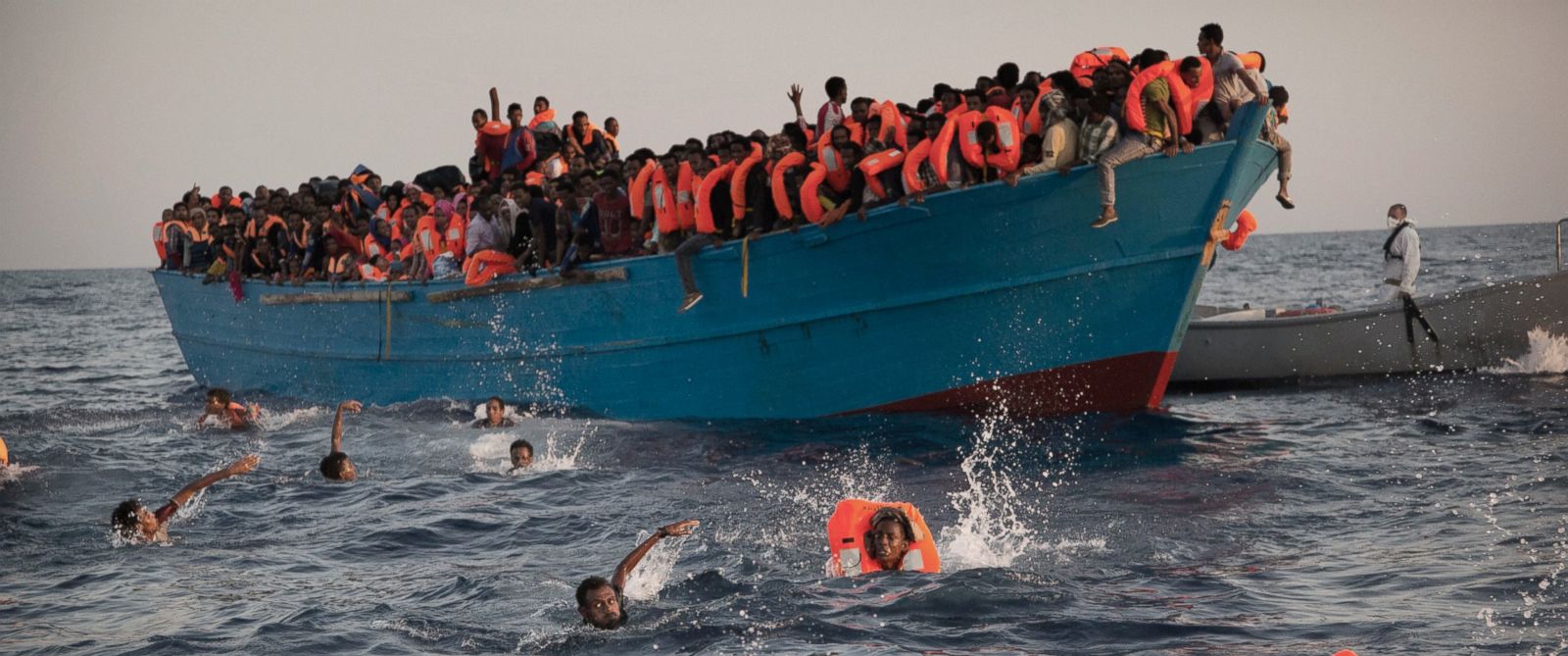
PHOTO: Migrants, most of them from Eritrea, jump into the water from a crowded wooden boat as they are helped by members of an NGO during a rescue operation at the Mediterranean sea, about 13 miles north of Sabratha, Libya, Aug. 29, 2016.PlayEmilio Morenatti/AP Photo
 

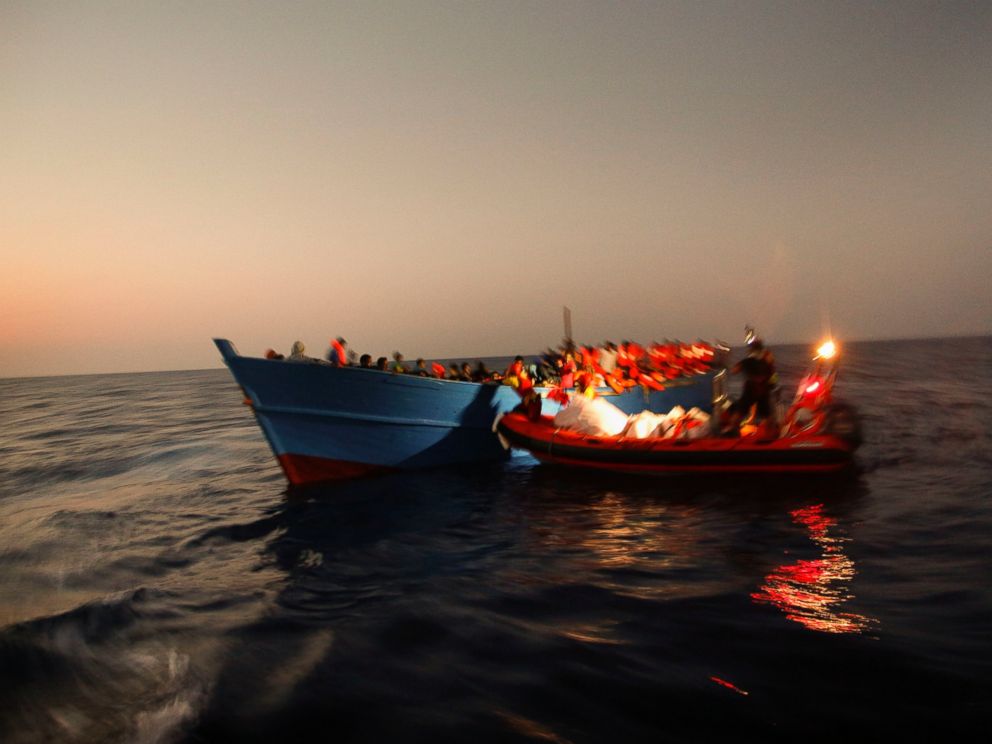
The refugees, many of them from Eritrea, jumped into the water from more than 20 boats roughly 13 miles north of Sabratha, a coastal city in Libya. They were helped by the Italian Coast Guard and workers for a non-governmental organization.

Images show people struggling to swim in the water and groups clustered together in the rescue vessels.

PHOTO: Migrants sailing in a crowded wooden boat carrying more than seven hundred migrants, are helped by members of an NGO during a rescue operation at the Mediterranean sea, about 13 miles north of Sabratha, Libya, Aug. 29, 2016.Emilio Morenatti/AP Photo
Migrants sailing in a crowded wooden boat carrying more than seven hundred migrants, are helped by members of an NGO during a rescue operation at the Mediterranean sea, about 13 miles north of Sabratha, Libya, Aug. 29, 2016.more +

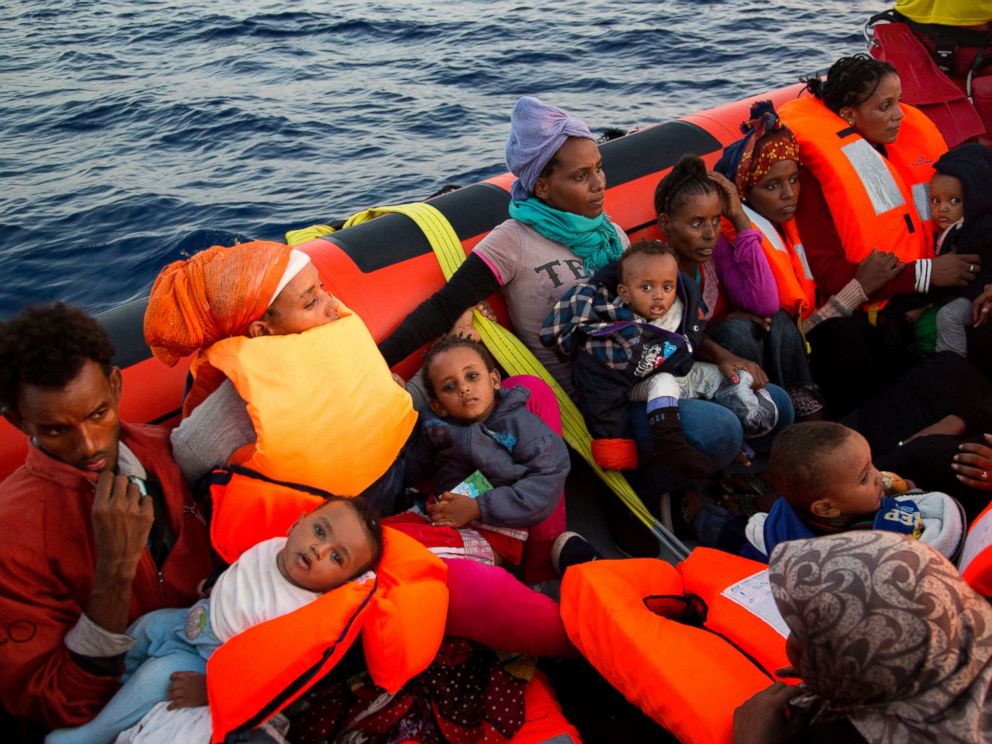
Large numbers of small children who apparently braved the perilous journey along with their families can be seen seated on the laps of adults.

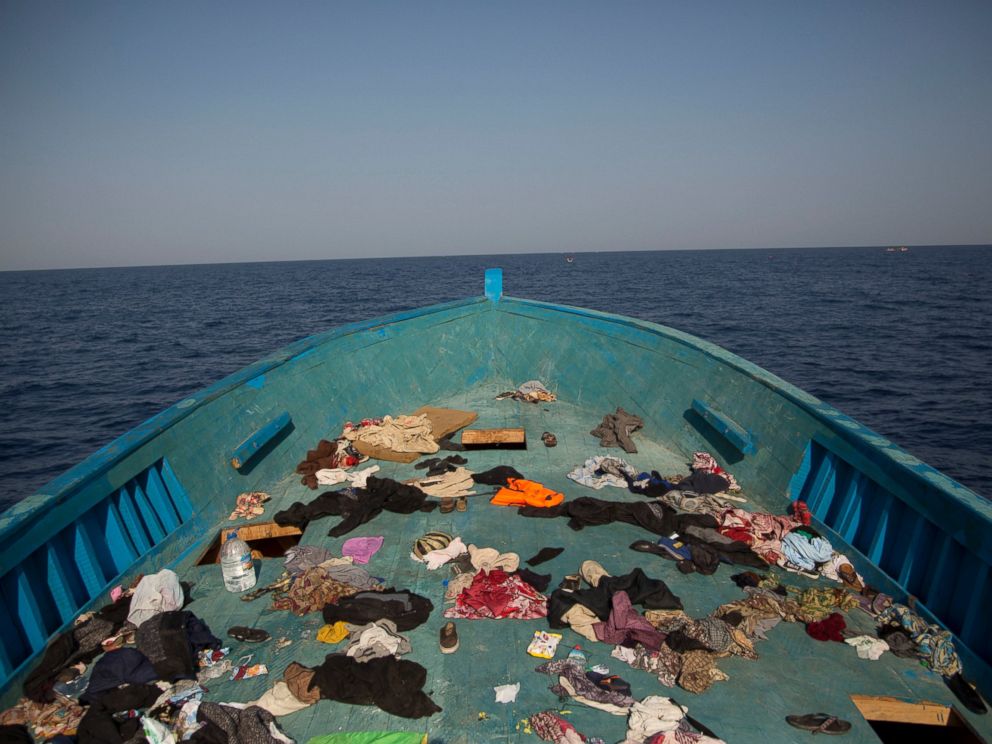
In one image, clusters of personal belongings are shown scattered around the deck of an abandoned ship.

Imagery of refugees crossing the Mediterranean Sea has become iconic in recent years, as hundreds of thousands seek safety or employment by journeying to Europe from the shores of Morocco, Algeria, Libya, Egypt, and Turkey.

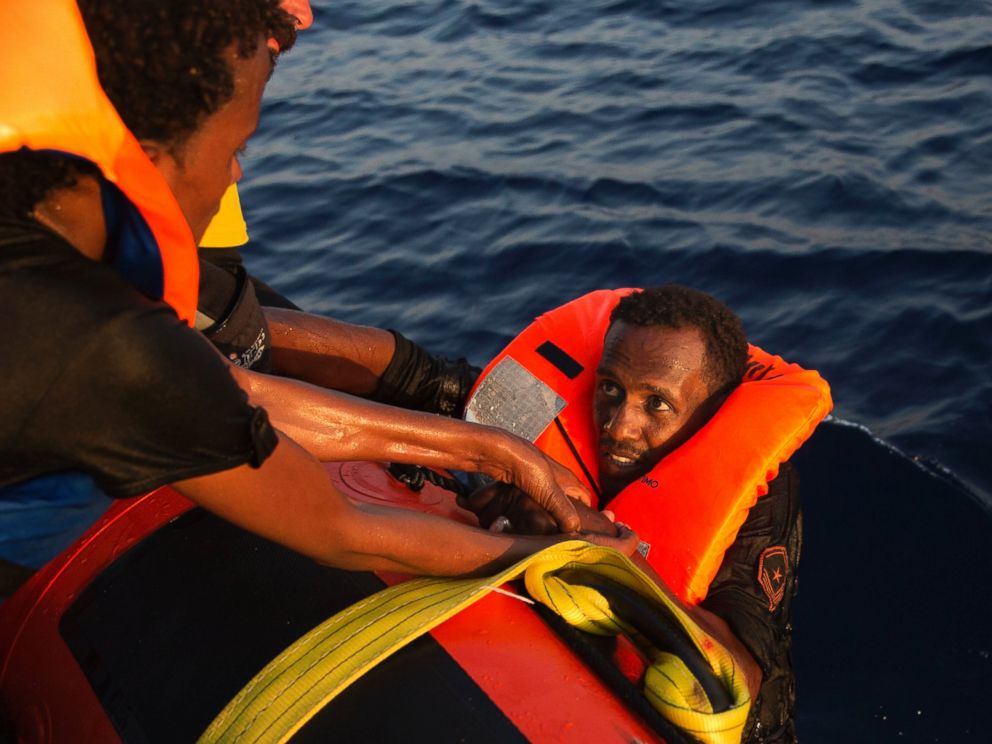
PHOTO: A migrant from Eritrea is helped after jumping into the water from a crowded wooden boat during a rescue operation in the Mediterranean sea, Aug. 29, 2016.Emilio Morenatti/AP Photo
A migrant from Eritrea is helped after jumping into the water from a crowded wooden boat during a rescue operation in the Mediterranean sea, Aug. 29, 2016.more +

The UN reports that 271,218 of people arrived by sea this year, and that 3,167 who attempted such a trip are either missing or dead.

Although much attention has focused on refugees from war-torn Syria, many refugees are also from Eritrea.

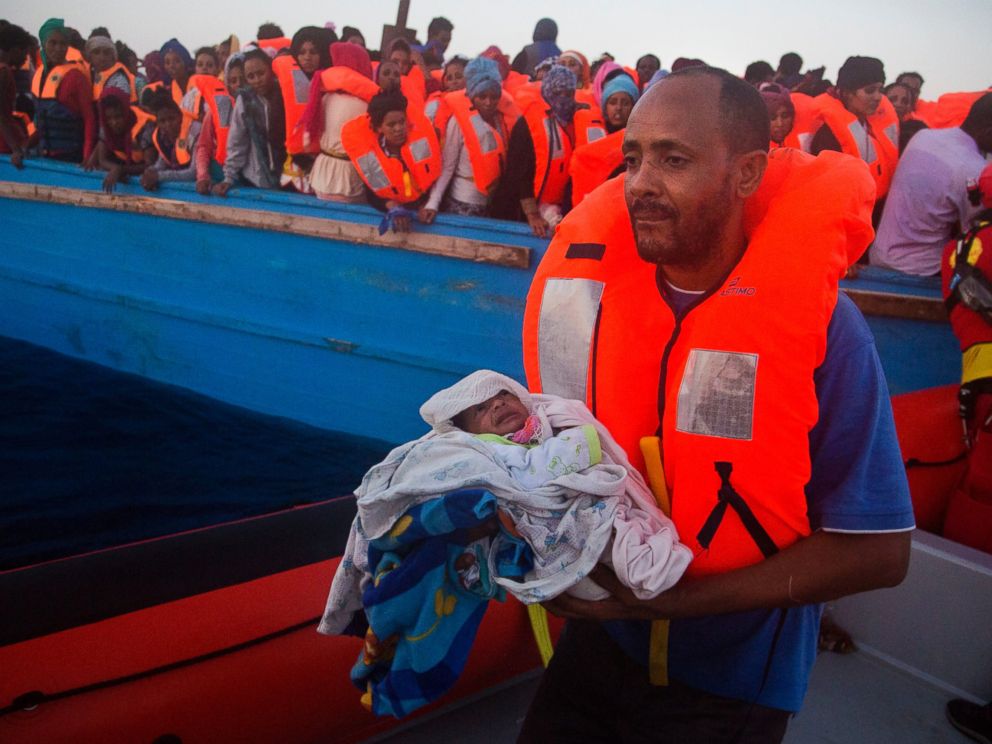
PHOTO: A man carries his five-day-old son after been rescued from a crowded wooden vessel as they were fleeing Libya during a rescue operation in the Mediterranean sea, Aug. 29, 2016. Emilio Morenatti/AP Photo
A man carries his five-day-old son after been rescued from a crowded wooden vessel as they were fleeing Libya during a rescue operation in the Mediterranean sea, Aug. 29, 2016. more +

Hundreds of thousands have fled Eritrea, located on the horn of Africa and bordering Sudan, due to the country's violent, repressive government and limited opportunity for many citizens, according to rights organizations.

PHOTO: Migrants from Eritrea hold their children after been rescued from a crowded wooden boat as they were fleeing Libya, about 13 miles north of Sabratha, Libya, Aug. 29, 2016. Emilio Morenatti/AP Photo
Migrants from Eritrea hold their children after been rescued from a crowded wooden boat as they were fleeing Libya, about 13 miles north of Sabratha, Libya, Aug. 29, 2016. more +

"Eritrea’s dismal human rights situation, exacerbated by indefinite military conscription, has led thousands of Eritreans to flee every month," according to Human Rights Watch.

PHOTO: Belongings left behind by migrants are seen in the floor of a wooden boat where more than seven hundred migrants were fleeing Libya, during a rescue operation in the Mediterranean sea, about 13 miles north of Sabratha, Libya, Aug. 29, 2016. Emilio Morenatti/AP Photo
Belongings left behind by migrants are seen in the floor of a wooden boat where more than seven hundred migrants were fleeing Libya, during a rescue operation in the Mediterranean sea, about 13 miles north of Sabratha, Libya, Aug. 29, 2016. more +

The group cites forced labor, arbitrary arrests, detentions, torture, restrictions on freedoms of expression and movement, and repression of religious freedom as being among the incentives Eritreans have to flee their country.

Source=http://abcnews.go.com/International/thousands-refugees-rescued-off-coast-libya/story?id=41717703

ኣብ ኤርትራን ጅቡትን ወተሃደራዊ ትምህርቲ ክወስዱ ዝምዝገቡ ዝነበሩ የመናውያን ሓደስቲ ተዓለምቲ ብኣጥፊእካ ጥፋእ ዝብል ናይ ኣሸበርቲ ነብሰ-ቅትለታዊ ስጕምቲ ብዝተፈነወሎም መጥቃዕቲ 54 ክመቱ ከለዉ፥ ልዕሊ 60 ድማ ቆሲሎም ክብል ሓደ ስሙ ክጥቀስ ዘይደለየ በዓል ስልጣን የመን ከምዝገለጸ ኢንተርናሽናል ኒው ዮርክ ታይምስ እተባህለ ጋዜጣ ኣብ ናይ ሰሉስ 30 ነሓሰ 2016 ሕታሙ ሓቢሩ። እቶም ተዓለምቲ፡ ኣንጻር’ቲ ኣብ ሰንዓ መንግስቲ መስሪቱ ዘሎ ናይ ሖትይን ሓይሊ ንምውጋእ ኢዮም ዝምዝገቡ ነይሮም።


እቲ ብነታጒ ዝተጻዕነት መኪና ዝተፈጸመ መጥቃዕቲ፡ ብሰኑይ ዕለት 29 ነሓሰ 2016 ኣብ ወደብ ከተማ ዓደን ኢዩ ተኻይዱ። ደዓሽ፡ እቲ ስርሒት ባዕሉ ከምዝፈጸሞ ተኣሚኑ ኣሎ። እቶም ጉድኣት ዝወረዶም ተዓለምቲ ካብ 20 ክሳብ 30 ዝዕድሚኦም መንእሰያት ኢዮም ነይሮም።

ባሕቲ መስከረም፡ ንኤርትራውያን ፍሉይ ትርጕም ዘለዋ ኣገዳሲት ዕለት ኢያ። ኣገዳሲት ዝገብራ ድማ፡ ኣብ ኣጽዋርን ሓጺነ-መጺን ዘይኰነስ፡ ኣብ ህዝቢ ኤርትራ እምነት ኣንቢሩ ዝተበገሰ ፍትሓዊ ቃልሲ ስለዝዀነ ኢዩ። ስለኢዩውን፡ እቲ ብመሪሕነት ጅግና ስውእ ሓምድ ኢድሪስ ዓዋተን ብዉሕዳት ሰባትን ኣረጊትኣጽዋርን ዝጀመረ ቃልሲ ኣብ ሓጺር ግዜ ነቲ ብዘመናዊ ኣጽዋር ዝተዓጥቀን ናይ ዓለም ደገፍ ዝነበሮን ባዕዳዊ መግዛእቲ ኢትዮጵያ ነቕነቕ ከብሎ ድሒሩ እውን ክድምስሶን ዝኸኣለ። ኣብ ውሽጢ 14 ዓመታት ጥራሕ፥ ሰውራና ካብ መታሕትን ጐቦታት ሳሕልን ናብ ከባቢ ኣስመራ ክበጽሕ ዝኸኣለሉ ምስጢር ሳላ ዝነበሮ ህዝባዊ ደገፍ ኢዩ።

መግዛእታዊ ስርዓት፡  ዋላኳ፡ ናይ ኣመሪካ ፡ሶቭየት ሕብረት፡ እስራኤል ዴሳዊ ደምበ ብሓፈሻ ደገፍ እንተነበሮ፡ ንውሳኔን ድሌትን ህዝቢ ኤርትራ ክዓጽፍ ግን ፈጺሙ ኣይከኣለን። እዚ ጥራሕ'ውን ኣይኰነን። ሰውራ ኤርትራ፡ ነህዛብ ጐረባብቲ ሃገራት ኣንጻር ደርባውያንን ብሄራውያንን ጨቈንቶም ክለዓሉን ምእንቲ ሓርነቶም ክቃለሱን ኣተባቢዕዎምን ኣርኣያ ኰይንዎምን ኢዩ።

ብሓድነትን ጽንዓትን ህዝቢ ኤርትራ ድማ፡ ኵሉ ኣንጻር ሰውራና እተዋደደ ውዲት፡ መጥቃዕቲ፡ ጸለመ፡ ታህዲድን  ምጕብዕባዕን ፈሺሉ ኢዩ። ሓድነትና፡ሓይልና ምዃኑ ተመኵሮና እኹል ትምህርቲ ኢዩ።

ካብተመኵሮተበጊስና፡ ነዚ ሕጂ ንህዝብና ሓሳረ-መከራ ዘጽግቦ ዘሎ ስርዓት ኢድ ንኢድ ተታሓሒዝና እንተደኣ ተቓሊስናዮና  ግዝኣተ-ሕጊ ዝሰፈኖን ሰብኣዊ መሰላት ዝኽበረሉን ሃገር ክንሃንጽ ከም እንኽእል ክንዲ ፍረ ኣድሪ ትኸውን ጥርጣረ እውን የብልናን። ህዝብና፡ ካብ ዝሓለፈ 25 ዓመታት ኣብ ትሕቲ ምልካዊ ስርዓት ኢሳያስ፡ እኹል ትምህርቲ ቀሲሙ ኢዩ። ደቀይ ዝበሎም ክጠልምዎን ክጭቍንዎን ከምዝኽእሉ ብግብሪ ኣረጋጊጹ ኢዩ።በዓል ኣምሰለዩ ነቲ ስርዓት ንምጽብባቕ ዝበሉ እንተበሉ ነቲ ሓቂ ክልውጥዎ ኣይክእሉን ኢዮም።

ኣብ ቅድሜና ዘሎ ሕቶ እምበር ለውጢ ከምጽእ ድዩ ኣይመጽእን ኣይኰነን። ለውጢ ክመጽእ ምዃኑ ዘካትዕ ጕዳይ ኣይኰነን። እቲ ዝመጽእ ለውጢ እወንታዊ ለውጢ ክኸውን ንምግባር ግን ዓቢ ስራሕ ገዛ ኣብ ቅድሜና ተደቂኑ ኣሎ። ዝነበረና ሓድነትን ነብሰ-ምትእምማንን ናብ ቦታኡ ክንመልሶ ኣሎና።መንእሰያትና እናተማህሩን እናተቓለሱን ንዝሓሸ መጻኢ ክውን ክገብሩ ቆሪጾም ክብገሱ ኣለዎም። ዓበይትን መራሕቲ ሃይማኖትን ድማ፡ ንዝተጋገየ ዓገብ ክብሉን ብስርዓት ህግዲፍ ዝፍጸም ዘሎ ግህሰታት ሰብኣዊ መሰላት ደው ክብል ድምጾም ከስምዑን ይግባእ።

ኣብ መደምደምታ፡ ብምኽንያት መበል 55 ምጅማር ብረታዊ ቃልስና፡ ህዝቢ ኤርትራ  ምእንቲ ሃገራዊ  ናጽነቱ ንዘርኣዮ ጽንዓትን ተወፋይነትን ዝኸፈሎ ረዚን ዋጋን ደጊምና ነመጕስን ንንእድን። ኤርትራ፡ ልዑላዊት ሃገር ክትከውን ምብቃዓ ድማ እንቋዕ ሓጐሰና ንብል።እቲ ንዓንዲ ሕቆ መግዛእቲ ዝሰበረ ህዝቢ ንዓንዲ ሕቆ ምልኪ ከምዝሕምሽሽ ኣይንጠራጠርን ኢና።

ዓወት ንህዝባዊ ቃልስና

ውድቀት ንዲክታቶርያዊ ስርዓት ኤርትራ

መንግስተኣብ ኣስመሮም

ኣቦ መንበር ሰዲህኤ

31 ነሓሰ 2016

A Article 4Time is moving on; the clock keeps on ticking without a break, and we have no control of it. As it is said, “Time and tide wait for nobody” Time is uncontrollable; time cannot be managed; we can only manage ourselves and the use of time. Frequently, we take for granted that there is always plenty of time. It is evident that there is plenty of time for everything, if the value of time is properly understood and if the use of time is effectively managed. Managing the use of time is critical to the success and happiness of any person in our professional career and personal life. Managing the use of time is actually self-management. It is interesting that the skills we need to manage others are the same skills we need to manage ourselves and our own families. In our rapidly-changing, time-conscious world, we are encouraged to get more done in less time by effectively managing the use of time. We need to realize that we cannot make more time because the quantity of time has already been set by the Almighty God and it will never change at all. There will always be sixty seconds in a minute, sixty minutes in an hour, twenty-four hours in a day, seven days in a week, and fifty two weeks in a year that we have to use for various purposes in life. Time has more value than money. We can make more money, but we cannot make more time. Time is the most valuable and precious resource given to us every day from God and we often fail to appreciate this divine gift.

To illustrate and emphasize the magnitude of the value of time, suppose a bank credits our account each morning with $86,400. The bank carries over no balance to the next day. Every evening we lose the balance we failed to use during the day. What would we do? Of course, we would withdraw out every cent and use it every day. Obviously, to maintain a zero account balance by the end of the day, it requires the skill of managing how to spend the money wisely. Parallel to this analogy is that each of us has such a bank and its name is ‘TIME.’ Every morning, the bank credits our account with 86,400 seconds to spend for the day. By the end of the day our account should indicate a zero balance. Every night it writes off what we have failed to invest or spend. If we fail to use the day's deposits, it means we lost the time and there is no way going back to recover the lost time. We need to realize that time is free, but it is priceless. We cannot own it, but we can use it. We cannot keep it, but we can spend it. Once we have lost it, we can never get it back. It has been said that ‘three things we cannot recover in life: the WORD after it is said; the MOMENT after it is missed; and the TIME after it is gone.’ It is evident that time is what we all want most, but time is what we use worst. The following interesting short story narrates the value of managing the use of time.

Once upon a time, king Mahfuz and a lazy man named Mahbul were very good friends. One morning, the king said to Mahbul, "Why don't you do work to earn some money?” Mahbul replied, "No one gives me job. My enemies have told everyone that I never do any work in time.” The generous king said, "You can go into my treasury and collect as much wealth as you can, untill sunset.” Mahbul rushed home to tell this opportunity to his wife. She said, "Go and get the gold coins and gems now." He replied to her, “I cannot go now. Give me lunch first." After lunch, he took a nap for an hour. Then in the late afternoon, he picked some bags and went to the palace. On the way, he felt hot so he sat under a tree to rest. Then, two hours later, he got up to go to the palace but saw a man showing some magic tricks. He stopped there to watch for an hour again. After the show he remembered that he had to run to the palace. When he reached the palace it was already time for sunset. The palace gates had been shut. So, Mahbul had lost a golden opportunity to collect wealth from the king’s treasury. Every moment is precious to those honorable people who know the value of time. Mahbul did not know how to manage the use of time. Time flew silently over Mahbul, but later he noticed that time has left a painful memory behind. In other words, we need to appreciate the valuable time while it is still in our possession rather than to regret later once we have lost it forever. As Benjamin Franklin said, “Lost time never found again.” Mahbul lost the valuable treasure due to lack of realizing the value of time and lack of managing the use of time. We need to understand that the more we value our precious time, the more we value ourselves and the more valuable things time can bring to us. Another relevant story, which is told in many cultures, including our Tigrigna traditional folk tales, also narrates the value of managing the use of precious time.

Once upon a time there was a speedy Hare who bragged about how fast he could run. Tired of hearing him boast, the slow and steady going Tortoise challenged the Hare to a race. All the animals in the forest gathered to watch this interesting race. The gun was fired and the race got started promptly. The Hare ran down the road for a while and then paused to rest. He looked back at the Tortoise and cried out, "How do you expect to win this race when you are walking along at a very slow pace?" The Hare was so sure about winning the race. He said, "There is plenty of time to relax." He stretched himself out alongside the road and decided to take a little nap under the shade of a tree and then he fell fast asleep. While the Hare was dozing and dreaming the Tortoise continued walking slowly and steadily without despair and went ahead of the Hare. He never, ever stopped for any moment until he came to the finish line. The animals who were watching cheered loudly for the Tortoise. Their loud noise woke up the Hare. He stretched and yawned and began to run again, but it was too late. The Tortoise was past the finish line and had won the race.The moral lesson of the story is that the Tortoise, though very slow-going, won the race because he was determined and used his time wisely. The Hare, though fast-running, lost the race because he was overconfident and did not use his time wisely. Unfortunately, the Harehad taken his win for granted.

Managing the use of time is also reflected in the kind of relationship we establish with other people around us. We live with people and time is always an important factor involved in our interpersonal relationship. The typical example is the way we respect appointments in our social events like wedding ceremony, funeral service, festival, and others. It is commonly observed that we do not arrive at churches, community centers, and other meeting places for social events on time. Coming late to social events, or not respecting appointments, which is commonly referred as ‘Qozera Habesha’ (ቆጸራሓበሻ), has become an accepted norm particularly among Eritreans in Diasporas. We come to church in the middle of the sermon and leave when the spiritual service is still in session. We come to a wedding event late when the food is too cold to eat, or when the food service is about to close. We come too late for various types of social functions. Non-Eritrean guests who are not familiar with our habitual tardiness at times leave the premises before the event even begins. As William Shakespeare said, “Better three hours too soon than a minute too late.” Though it is better to be late than never, it is always better to be on time than to be late because punctuality signifies profound commitment and maturity which in return generates honor and respect among ourselves.

In addition, some of us even do not go to church, or we prefer to go to a different church because the spiritual service, especially in the Eritrean Orthodox Christian church, is too long. If the church desires to increase the size of its congregation and seek the support and active participation of the Eritrean scholars and professionals, the spiritual service has to be customized to an appropriate time limit so that the time period will suit and meet the needs of the church followers. Members of the clergy need to be time-conscious and make the necessary adjustment to accommodate the demands and needs of their congregations because many of us living in big cities constantly juggle our time to meet other social obligations that occur on Sunday. Thus, if we do not understand properly the value of time and manage effectively the use of our precious time, we are not much different from our friend, Mahbul, who abused his time and could not even indulge himself with the valuable wealth from the king’s treasury when he had all the chance. Likewise, it is quite clear that we also do not seriously respect and honor the value of time. Our use of time in church and in other social events could be very productive, if we change our attitude and have a better perspective about the value and use of our precious time.  

Time is really an effective teacher. It has a wonderful way of showing us what really matters in life. As Nelson Mandela said, “We must use time wisely and forever realize that the time is always ripe to do right.” It is true that we do have time to do the things right, if we effectively manage the use of time. We have parental obligation to allocate and spend adequate time with our children when they are growing up. Asgele and his friends spend plenty of time gossiping and talking politics by going to Starbucks and Dunkin Donuts in the evening after work. Naturally, it means that they spend little or no time with their respective families. Asser, Asgele’s ten years old son, always thought that his father comes directly home from work every evening. One evening, Asser asked his father how much he earns per hour at work. Asgele got angry at his son and shouted, “It is none of your concern.” After a while he wondered why Asser asked him such a question. So, he called his son and said, “If you really want to know, I earn $20 an hour.” Immediately Asser asked his father, if he could borrow $10 from him. At this time Asgele really got angry at his son and shouted again, “You want the money to play video games instead of doing your school work. Now, go to your room.” After he cooled down Asgele thought that Asser might need the money for some necessary things like school supplies. Asgele went to Asser’s room and gave him the $10. Immediately again, Asser counted $10 from his piggy bank and the $10 from his father, he collected a total of $20. He gave the $20 to his father and said, “I am paying you $20 for one hour of your time to spend time with the family.” Asgele was devastated, embarrassed, and felt ashamed. He was speechless and wept like a little boy. He hugged his son and kissed him on his two cheeks. He was very proud of his son for making him aware that family always comes first. The father was supposed to be the role model of his son, instead the son became the role model of his father. Since the above mentioned incidence with his son, Asgele has abandoned his old and reckless behavior and became an improved family person. He has developed a time-conscious attitude and became responsible and very much concerned about the value of family time.

If we want our children to turn out well and appreciate the value of time, we need to spend plenty of time with them before they even start to put their little feet on the ground. No matter how busy we are or might be, we must spend time with our children because family is the only effective institution that makes a positive difference in the lives of our children and creates unconditional love among family members. We need to realize that the most important time is the amount of time that is spent together with our own children because time spent with own family is the greatest gift of life. It is evident that family time is more important than material treasure or socio-political recognition. No amount of financial wealth or professional success can take the place of time spent with family. Family time is the bond that links our true family and strengthen our family relationship and love. Family time is sacred time that should be protected and respected by parents all the time. We can value our precious time only when we value our family. At the end of our life, we will regret the time not spent with our family because time is the only resource of our life we have to determine how to spend it wisely.

To put the value of time into proper perspective and to have a clear insight of the real concept of time, it is essential to read and understand seriously the following statements: To realize the value of ONE YEAR, ask a student who failed a course and has to repeat one more year; To realize the value of ONE MONTH; ask a mother who finally gave birth to a beautiful baby; To realize the value of ONE WEEK, ask the nervous editor who has not yet collected enough materials for his weekly newspaper; To realize the value of ONE HOUR, ask the lovers who are eagerly waiting to meet; To realize the value of ONE MINUTE, ask a person who missed the train and would be late for a job interview; To realize the value of ONE SECOND, ask a person who just avoided a deadly accident. As Charles Darwin said, “A person who dares to waste one hour of TIME has not discovered the value of LIFE.” This is because, “Life teaches us to make good use of TIME; while time teaches us the Value of LIFE.” In relation to the value of time it is also said in Arabic, “alAb min kulu lakin mateAb bilwoKt Zemin.’ Literally it means, we can play with anything, but we cannot play with time because time is in many cultures is the most precious and priceless gift of God – ‘woKt Kali…giziye worki…time is gold’.. Thus, it is crucial to treasure every moment that we have every day because yesterday is history, tomorrow is mystery, but today is a gift. That is the reason why it is called the Present!

In general, there is nothing magical about getting the most from the God-given time; it just takes planning and commitment. There is no mystery about managing the use of time. What needs to change is our perception about the concept of time, and how we manage the use of time. But managing the use of time requires self-discipline and self-control until our attitudes and behavioral changes are internalized and institutionalized in our own way of thinking and doing things. Then, managing the use of time becomes an everyday work habit. Plans and schedules for managing the use of time are useless, if one does not follow them. In managing the use of time we should be able to develop a formidable structure to our life and an appropriate program to our actions and determine that each remaining day in our life will be invested in those activities which will return the personal, professional and spiritual rewards that we desire. This process can help us overcome procrastination and manage stress, help us get organized, prioritize and set goals effectively, and help us invest our precious and priceless time properly and wisely.

Tick, tick, tick …The Clock Keeps on Ticking without a Break. It doesn’t wait for us.

The Trust Building Conference organized by the Eritrean People's Democratic Party (EPDP) in Frankfurt, Germany, between 10 13 August 2016 was focused on the following seven themes:

  1. Reconciliation
  2. Trust building
  3. Role of media in trust building
  4. Why mistrust persists in the Eritrean opposition camp
  5. Conflict resolution mechanisms
  6. The state of Eritrean social and cultural values
  7. Eritrean refugee influx and solutions

Workshop 1Papers were presented on every topic by professionals and area experts. The presentations were followed by extended discussions and dialogue. The meaning of themes raised for discussion; their positive and negative contributions in the Eritrean national struggle as well as the various mechanisms that can be utilized to solve problems were discussed in great length at the conference which was more or less a continuation of similar endeavors in the past.

Workshop 2

The conference scrutinized the causes of mistrust which have been bedeviling and preventing joint work in the Eritrean arena, and understood them to be remnants of lingering causes of mistrust based on unresolved political, cultural, geographical, and generational gaps in the experience of the struggle.

Workshop 3

Naturally, conflicts do occur during liberation struggles, but, unfortunately, the major differences that cropped up in the Eritrean arena were left unresolved for long and became causes for simmering grudges and mistrust. Not respecting or not abiding by or violating rules and agreements reached at congresses and meetings have prevented the possibilities of building transparency and prioritizing actions within the Eritrean political organizations.

Workshop 6

The telegraphic summary below lists the key public, political and diplomatic spheres analyzed in at the conference in dept exploring the strategic schemes and the manner of handling the implementation of the objectives and their outcome:

  • Using the mass media to strengthen the struggle for Eritrean people's cause and never to let it fall to harmful internal squabbling nor let the ruling clique's propaganda to slip into our ranks via our own media channels;
  • Recognizing that reconciliation and forgiveness are part of the price paid for lasting peace;
  • Being able to use our so far side-stepped social and cultural values as building blocks for mechanisms to resolve our socio-political conflicts;
  • Acquiring full knowledge and understanding of [possible divergences] between social and political groups in the society;
  • Having clear and common understanding of the nature of the ruling clique;
  • Giving full attention and understanding to claims of victimhood by any segment of our people;
  • Sharing clear translations of media writings in Arabic and Tigrigna to all sections of the population;
  • Narrowing down the widening generational gap by partly using our age-old social values as conflict resolutions mechanisms;
  • Firmly believing that the sure way to remove the ruling clique depends upon our common stand and action;
  • Exploring and employing all possible means and ways to help Eritreans   who are suffering of the consequences of armed conflicts and war caused mental disorders and stresses;
  • In particular, helping and consoling young Eritreans who are victims of the countless abuses of the ruling clique and suffering of untold miseries and psychological disorders;
  • The critical urgency of creating the ground work to empower Eritrean women to play their roles from high positions of decision making and execution;
  • Encouraging and promoting the growing popular movements against the ruling clique to create effective coordination of joint struggle armed with full awareness of the need of smooth transition to democratic system of governance;
  • Striving to create a common and clear diplomatic action by the opposition camp and preparing/building human resources equipped with the necessary skills to do the required tasks.

Workshop 11

The Trust Building Conference underlined that, first and foremost, there was the utmost need of making paradigm shift in the over-all attitudes of the forces struggling for change whose past pledges for action in unison did not bear fruit. Likewise, the conference participants hoped and highly recommended for efforts by all concerned to hold holding of similar workshops whenever and wherever possible.

EPDP Magazines