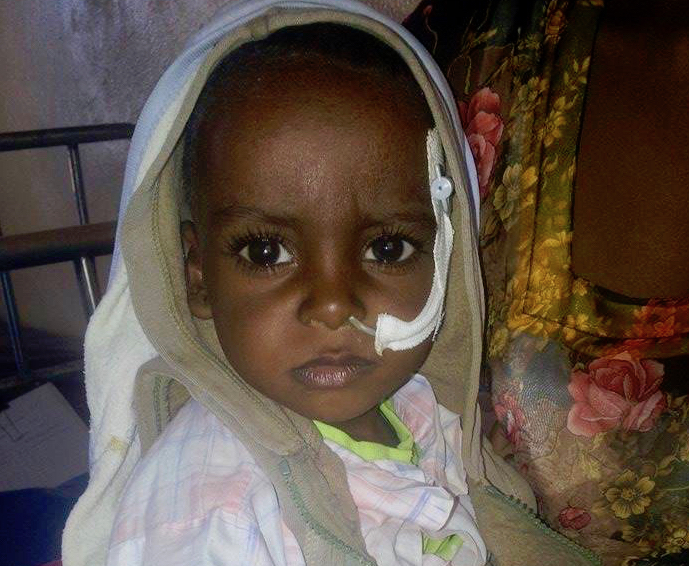
(file photo).
16 November 2019

Ethiopian press freedom gained a much-needed push thanks to reforms by prime minister Abiy Ahmed. But already the push back is occurring.

In a small barely furnished office with some of the electric wiring still showing in half-completed walls, Habtamu Mekonnen sits at his laptop putting the finishing touches to tomorrow's Berbera newspaper edition.

Just over a year old, the fledging newspaper is one of a plethora of new publications that sprang to life following the whirlwind of reforms that helped garner Abiy Ahmed the Nobel Peace Prize in October 2019.

The Nobel committee cited the prime minister "discontinuing media censorship" as one of Abiy Ahmed's many achievements in paving the way to establish a new and better democracy in Ethiopia.

Ethnic tensions, journalism and activism

But the bonanza of media activity that followed is now generating increasing concerns that new media freedoms are being abused to stoke ethnic tensions.

Media are being accused of abetting groups seeking to leverage identity politics to destabilise the country for their own ends.

At the same time, the government is now facing criticism for repeating the authoritarian ways of previous Ethiopian governments toward media and attempting to put the lid back on what it opened.

"This paper exists because of Abiy's reforms," says Berihun Adane, an Addis Ababa-based journalist who has been published internationally and who helps mentor reporters at Berera. "But now we are witnessing the same thing that has happened after every regime change: first there are lots of new magazines and newspapers, then the government starts to crack down on them."

Back in 2018, reforms that opened up Ethiopia's previously restricted media space included the freeing of detained journalists and bloggers, along with an end to the blocking of more than 260 websites and the restoration of access to media outlets which had been been forced to work in exile.

Hence in the 2019 World Press Freedom Index compiled by Reporters Without Borders, Ethiopia jumped 40 places from number 150 to 110 out of 180 countries -- the biggest improvement by any country.

But Berihun has experienced the other side of this, having recently been released from three months in prison due to charges of inciting "terrorism" through his journalism.

"I had the impression Abiy was friendly to media," Berihun says about an interview he conducted with the prime minister. "Now Abiy seems to hold a view that categorizes media as either hate- and ethnic-based or as mainstream. But it should be up to professional institutions to judge media conduct."

Continued unrest

The prime minister's concerns over ethnic tension are not without reason. Ethnic-related conflict has displaced millions, and most recently resulted in about 80 deaths at the end of October.

"Many individuals are mixing up the roles of activist and media when they shouldn't go together," says Abel Wabella, managing editor of the Addis Ababa-based newspaper Addis Zebye. "You have people running media who are calling for protests -- it's totally absurd."

The political activist and media mogul Jawar Mohammed, who founded the Oromia Media Network, has come under significant criticism for making incendiary comments on social media.

The violence at the end of October erupted after Jawar Mohammed alleged that police tried to remove his security guards, which had initially been assigned by the government. His supporters argue he played no direct role in demonstrations that were a spontaneous response to the government's actions.

Read more:Africa's innovative response to internet repression

Abiy even addressed parliament to discuss media "fomenting unrest," focusing on the role of Ethiopian diaspora figures like Jawar Mohammed, who started his International Oromo Youth Association (IOYA) while studying in the United States.

"Using their second nationality and foreign passports as an advantage, these media owners are likely to run away to their safe havens after inciting conflicts and leading the country into chaos," Abiy said.

New laws in the making

Part of the problem for Ethiopia's new media landscape, says Berihun and other seasoned journalists, is that after decades of suppression it remains institutionally weak.

Hence many Ethiopians rely on social media and foreign-based media for news, increasing the chances of misinformation and manipulation permeating the news cycle.

To address this, the government says it is seeking to improve both the capacity of and regulation of local media.

"The Ethiopian Broadcast Authority is in the process of reorienting its institutional form to better regulate," says Billene Seyoum, a spokesperson for the prime minister's office. "The appointment of experienced professionals to such institutions is a commitment by the Government to undo the repressive tendencies of such institutions in their prior form."

At the same time, Billene notes, the government is developing a new media law and an anti-hate speech law.

But some in the media industry are concerned such laws could be used to further stifle their new-found freedoms.

Amnesty International has condemned the government for using anti-terrorism measures to conduct a "surge in the number of arrests" since June.

"The use of Ethiopia's anti-terrorism proclamation to arbitrarily arrest journalists is completely out of step with reforms witnessed in the country," said Seif Magango, Amnesty International's deputy director for East Africa, the Horn and the Great Lakes. "This law must be revised to align with international standards and must no longer be used to harass journalists."

'Journalism not possible in this environment'

The shifting and strained media climate makes self-censorship by journalists more likely. Berihune says that as the case against him remains open, he is wary of what he writes and he avoids Twitter entirely in case his posts be used against him.

"In this environment, whereby the government says you are either with us or against us, journalism is not possible," says Eskinder Nega, a prominent Ethiopian journalist and blogger who was released from prison under Abiy Ahmed's reforms in early 2018.

Another problem for media organisations is the challenge of remaining viable financially.

"We have no profit, we can't get any revenue from advertising," says Rekike Tesera, Berera's 22-year-old editor, who earns about 6,000 birr (€181 or $200) a month.

"Organisations and businesses are afraid to advertise with media because of how the government might react, as media are being viewed as ethnically biased. We are viewed as being for the Amhara region, but we cover issues concerning the whole country," Tesera explained.

There is perhaps one upside to the current situation for struggling media. Berihun notes how the Berera readership has increased from around 2,500 a month to about 5,000 due to Ethiopia's volatile situation.

"When the political environment is good, you tend to see a decline in readership," Berihun says. "People are reading a lot at the moment."

Source=https://allafrica.com/stories/201911170006.html


New peace institute launched in Tigray

Wednesday, 13 November 2019 11:48 Written by

November 13, 2019 News

High Level meeting launches new peace institute in the Tigray region of Ethiopia

A High-Level meeting on “Rehabilitation, youth employment and digital innovation”, organized by the Mekelle, Adwa and Aksum Universities, was held in the historical city of Aksum, Ethiopia from 9 to 10 November 2019. During the meeting, the Mereb Institute for Peace Building, Development and Rehabilitation was inaugurated and the latest two volumes in the book series “Connected and Mobile: Migration and Human Trafficking in Africa,” were launched. Authors and editors from the two volumes, “Roaming Africa: Migration, Resilience and Social Protection and Mobile Africa: Human Trafficking and the Digital Divide, spoke about the dangers of forced migration, by illustrating human trafficking for ransom in countries such as Libya, and the effects of trauma on refugees.  The books further explore the movement of people in Africa with a diverse group of authors, shifting the dominant and often negative lens through which migration is looked at. Speakers on the cutting edge of peace building and the interlinked issues that drive forced movement on the African continent discussed the nexus between digitalisation, refugees. migration, rehabilitation and youth resilience and employment in mobile Africa. 

Linking academic research with practical solutions, the participants launched several building blocks for solving factors that undermine peace, fair use of data and youth employment. H.E. Aboubacar Sidiki Koné, Chair of the Committee on Cooperation, International Relations and Conflict of the Pan-African Parliament, observed that: “Everywhere we meet refugees, but young persons must work for peace in Africa. […] It is not what you say, but what you do for refugees.”

The Mereb Institute for Peace-building, Development and Rehabilitation is named after the Mereb River that flows between Eritrea and Ethiopia. The Institute will offer training to youth from the host and refugee communities and connect them to the labour market in this way according to the President of Mekelle University, a founding institution, it will: “…enable the youth from both Eritrea and Ethiopia to access education and participate in the economic and social rehabilitation.” The mayor of Aksum city, Elias Kahsay in his opening speech pointed out that: “Young generations should be given an equal chance.” V.C. Chindanya from Great Zimbabwe University observed that the Institute will require: “… a lot of work in terms of objectives but there is clarity on what needs to be done.”

Prof Kinfe Abraha (Mekelle University), co-chair for the event, pointed out that: “In order for somebody to be employable, he or she has to have the needed knowledge, skills and attitude, and that will be the result of training.” And, Prof. Mirjam van Reisen(Tilburg University) added: “The first aim of the Institute, is a certificate programme. We need the youth to have skills and knowledge, as well as experience. It is from that spirit that we feel that as academia, we have a responsibility to make sure that we have a low-threshold accessibility through which we can train up people and bring them in the society in a way they can contribute. They want to contribute; they just need to be shown the way.”

During the meeting concrete steps and solutions linking   research and actions for building peace and combatting disruptive factors to peace, such as human trafficking were also discussed. “I want to emphasize the issue of research, because many times, in various universities, a lot of research is done, but then there is no clear pathway where research is going to inform policy.” Said H.E. Zaminah Malole, Equal Opportunities Commissioner in Uganda.

Activities in the Mereb Institute are planned to start around mid-2020 after careful consultation with stakeholders. “It is supporting the peace dealing process of both governments. The idea that we are having is just a beginning – the main thing is, people have to be engaged.”

For more information, please contact:

Kibrom Berhe – This email address is being protected from spambots. You need JavaScript enabled to view it. – +251 92 025 4476

Or Klara Smits – This email address is being protected from spambots. You need JavaScript enabled to view it. – +251 934 344 960

Roaming Africa: Migration, Resilience and Social Protection(ISBN 9789956551132) and Mobile Africa: Human Trafficking and the Digital Divide (ISBN 9789956551019) are published by African Books Collective and are available through their webshop: www.africanbookscollection.com

Note for the press, not for publication:

For more information on the book or sales information, you may contact Carolina Bruno at

African Books Collection: This email address is being protected from spambots. You need JavaScript enabled to view it.
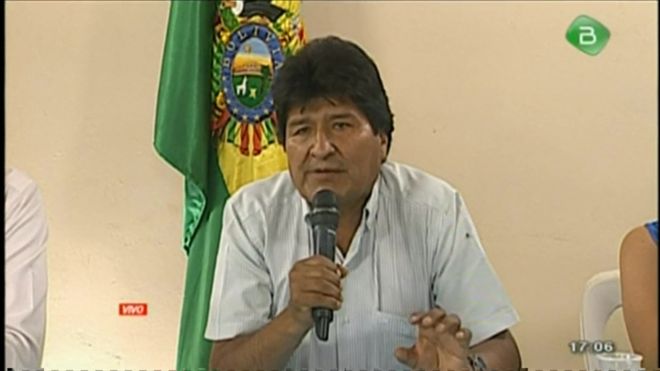
 

ኢቮ ሞራለስ Image copyright AFP ናይ ምስሊ መግለጺ ኢቮ ሞራለስ

ፕረዚደንት ቦሊቭያ ኢቮ ሞራለስ፡ ብድሕሪ'ቲ ኣብ ዝሓለፈ ወርሒ ዝተኻየደ መረጻ ብዝተልዓለ ናዕቢ እዩ ካብ ስልጣኑ ወሪዱ።

ንሱ ከምዝተዓወተ ምስገለጸ ብምኽንያት ዝተልዓለ ናዕቢ፡ ኣዛዚ ምክልኻል ሰራዊት እታ ሃገር ስልጣን ክለቅቕ ጸቕጢ ገይሩሉ እዩ።

ኣጻረይቲ ኣብቲ መረጻ ዘይስሩዓት አካይዳታት ከምዝነበሩ ዝሓበሩ ኮይኖም፡ ንሱ ግን ዕልዋ ከምዝተፈጸሞ እዩ ዝገልጽ።

ብተወሳኺ ኣብ ልዕሊ ደገፍቱ ዝኾኑ ፖለቲከኛታትን ቤተሰቦምን ጥቕዓት ይፍጸም ስለዘሎ፡ ነዚ ንምክልኻል ስልጣኑ ከምዝገደፈ ሓቢሩ።

ፕረዚደንት ሞራለስ፡ እቶም ተቓወምቲ ኣብ ልዕሊ ወገናቶም ዝፍጽምዎ ዘለዉ ጥቕዓት ጠጠው ከብሉ ተማሕጺኑ።

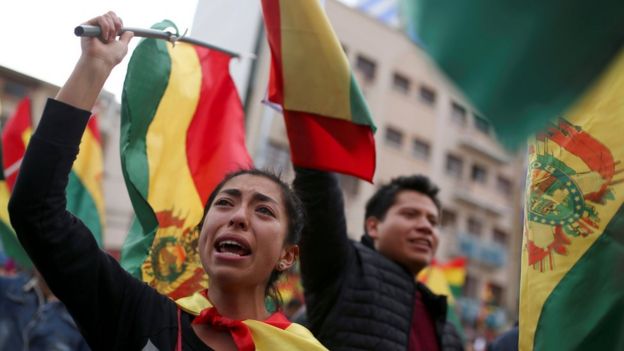
ተቓወምቲ Image copyright Reuters

ብተወሳኺ ምክትል ፕረዚደንት ኣልቫሮ ጋርሺያ ሊነራን፡ ፕረዚደንት ሰኔት ኣድርያና ቫልቫቴራን እውን ስልጣኖም ብፍቓዶም ለቒቖም ኣለዉ።

እቲ ፕረዚደንት ብፍቓዱ ስልጣኑ ብምግዳፉ እቶም ተቃወምቲ ሓጎሶም ገሊጾም።

Source=https://www.bbc.com/tigrinya/news-50372305


Eritrea: Isaias Afwerki and his inner circle

Monday, 11 November 2019 11:06 Written by

By Jeune Afrique

Posted on Thursday, 7 November 2019 16:51

Issayas Afeworki © REUTERS/Feisal Omar

Despite the lifting of UN sanctions in 2018, Eritrea remains diplomatically isolated.

And its rapprochement with Ethiopia has not contributed to the relaxation of the regime that President Issayas Afeworki introduced in 1993.

Still as secret as ever, he is surrounded by the faithful, who have accompanied him since independence.

Here are a few of the key personnel in Team Issayas.

Yemane Ghebreab

Yemane Ghebreab © UN Photo

A loyal and discreet political advisor, Yemane Ghebreab is originally from the Agame and is a Member of the Popular Front for Democracy and Justice (FPDJ), Eritrea’s sole and ruling party. He studied in the United States, where he joined the student wing of the Eritrean People’s Liberation Front (EPLF), now rebranded as the FPDJ.

Hagos Ghebrehiwot

Ghebrehiwot is Head of the Economic Affairs Section of the FPDJ and CEO of Hidri, a consortium founded by Afeworki that brought together the country’s private companies. As the president’s financial manager, he already managed the EPLF’s money, which earned him the nickname “Kisha” (“bag of potatoes”).

Abraha Kassa

Abraha Kassa © all rights reserved

As Director of the National Security Agency intelligence services, Kassa is also in charge of the president’s security. Ethiopia accused him of organizing Asmara’s support for the terrorist group Al-Shabaab in Somalia, an allegation he has denied.

Yemane Ghebremeskel

Yemane Ghebremeskel © all rights reserved
Ghebremeskel —nicknamed “Charlie” — manages Afeworki’s communication and has been Minister of Information and Government Spokesman since 2015. He was appointed Chief of Staff in 1993 when Eritrea gained independence. He has a degree in mathematics from Imperial College, London.

Source=https://www.theafricareport.com/19820/eritrea-issayas-afeworki-and-his-inner-circle/

Locust invasion: UN warning for Ethiopia, Kenya, Eritrea and Sudan

  • 8 November 2019
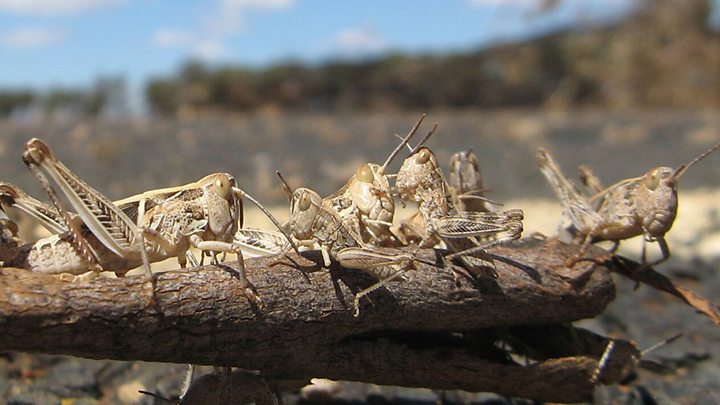
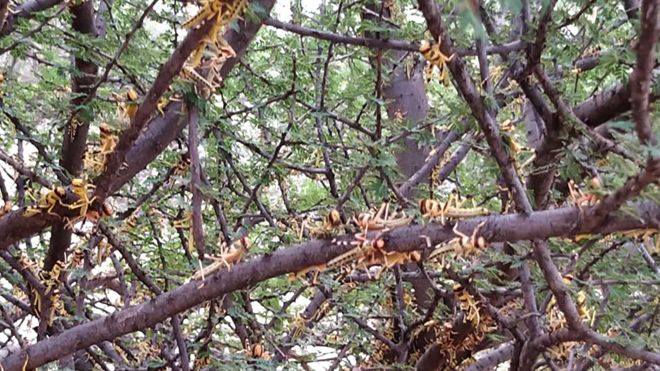
Locusts on a tree Image copyrightFAOImage caption The locusts are devouring tonnes of vegetation a day

The UN has said that if an Ethiopian locust infestation is not brought under control then the crop-devouring insect could "invade" neighbouring countries.

The Ethiopian government has called for "immediate action" to deal with the problem affecting four of the country's nine states, a UN statement said.

In northern Amhara state some farmers have lost "nearly 100%" of their crop of the staple grain, teff, it added.

Efforts to control the infestation have so far not been effective.

The authorities' work has also been affected by "ongoing insecurity" in some areas of the country, according to the UN's Food and Agricultural Organization (FAO).

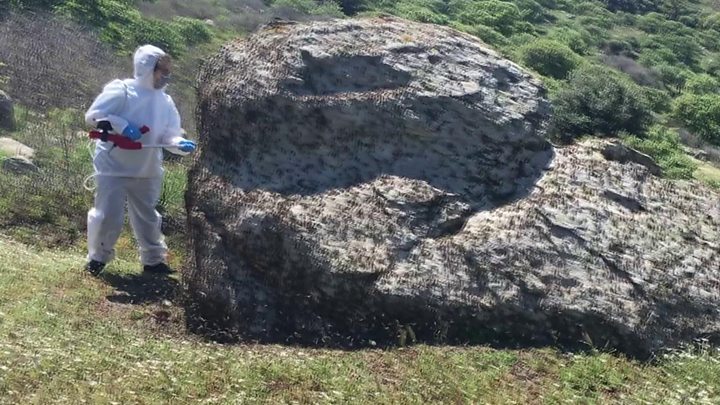
Last week, the government said it had sent planes to the affected areas to try to deal with the problem from the air.

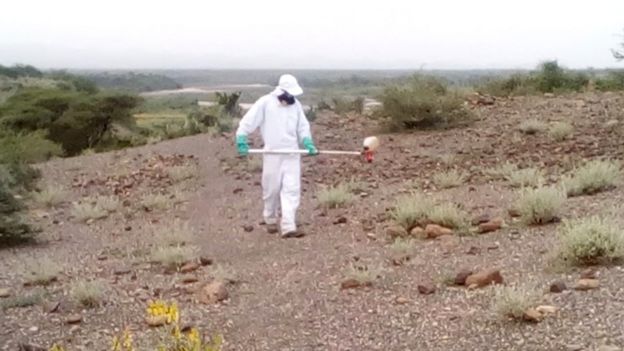
Man spraying area with locusts Image copyrightFAOImage caption The control measures in place have failed to stop the locusts spreading

Overall, the desert locusts have devoured crops and pasture across a swathe of land covering parts of the Tigray, Amhara, Oromia and Somali regional states.

The FAO estimated that the insects were eating 1.8 million tonnes of vegetation a day across 350 sq km (135 sq miles) of the country.

If additional control measures fail then the locusts "could continue moving within Ethiopia and invade" north-eastern Kenya, parts of Eritrea, and Sudan's southern coast, the FAO said.

The locusts are thought to have spread from Yemen three months ago.

You may want to watch/listen:

Media playback is unsupported on your device
 

The island of Agios Efstratios is battling a plague of locust

 
Media captionHow locusts were tackled on a Greek island
Media playback is unsupported on your device
 

Scientists at three British universities have researched why locusts swarm

Source=https://www.bbc.com/news/world-africa-50345204


Sudan's Prime Minister Abdallah Hamdok speaks to the media after the swearing-in ceremony on 21 August 2019 (AFP Photo)
November 5, 2019 (KHARTOUM) - Sudanese Prime Minister Abdallah Hamdok said on Tuesday he would hand over ousted President Omer al-Bashir to the war crimes court to meet the demand of the internally displaced persons (IDPs) in Darfur.

On the occasion of his visit to Zamzam, Abu Shouk and Salam camps on Monday, IDPs raised placards calling for al-Bashir’s handover to the International Criminal Court (ICC).

In a television interview aired on Tuesday, Hamdok said he would spare no efforts to address transitional justice issues.

"We must achieve what pleases the victims and makes them feel justice," he said.

"This is a fundamental demand that no barrier can stop it," he further stressed, referring to their demand to hand over al-Bashir to the ICC.

Hamdok’s comments came after statements by the Forces for Freedom and Change (FFC) leading member Ibrahim al-Sheikh on Sunday announcing their agreement to hand over Bashir to the International Criminal Court.

Last September, Hamdok said they would try al-Bashir inside the country after the needed legal and judicial reforms.

The ICC issued two arrest warrants against al-Bashir for alleged crimes against humanity, war crimes, and genocide committed in Darfur.

(ST)

Source=http://www.sudantribune.com/spip.php?article68454

Africa, Eritrea, Horn of Africa

The Eritrean Ministry of Information has published documents showing how the CIA, Mossad and others are attempting to undermine the Eritrean government.

But the ‘documents’ are not actually published. Just summaries [see below]. Eritrea suggests the ‘subversive operation’ was actually undertaken by Amnesty International and Human Rights Watch.

These allegations alone should ring warning bells. Neither human rights organisation would ever get involved in such activities.

If these reports are genuine, let the Eritrean government publish them in full, without redaction. Then we can judge their veracity.


From Recent Confidential Archives

Excerpts of the aborted subversive operation concocted against Eritrea by Amnesty International and Human Rights Watch in 2011 were published on this website few weeks ago.

Today, we present condensed reports of:

1.    A subversive scheme mapped out by the US Central Intelligence Agency (CIA) to instigate turmoil and upheaval in Eritrea to precipitate “regime change”;

2.    A confidential report circulated by the Israeli Intelligence Agency (MOSSAD) with malicious intent of demonizing the Government of Eritrea by falsely associating it with “terrorist organisations” in the Middle East.

These outlandish schemes were hatched in the second half of 2011.  In terms of purpose and intent, they were intertwined with numerous other acts of hostility pursued by various powers with much frenzy in those times.

As it will be recalled, acts of hostility perpetrated against Eritrea in the past 20 years, purportedly to advance certain “global strategies”, were numerous indeed.  Some of these reprehensible acts include:

•    The blatant act of aggression launched from 1998 until 2000 under the pretext of a border dispute;

•    The various subterfuges peddled to obstruct implementation of the ‘final and binding” EEBC Arbitral Decision;

•    Baseless accusation levelled against Eritrea at the UNHRC in 2013 and thereafter;

•    Organized human trafficking and youth migration pursued for the purposes of “strategic depopulation” and downgrading of Eritrea’s defense capabilities; etc.

All these hostile acts were frustrated and ultimately overcome through the resilience and steadfastness of the people and government of Eritrea; even if they had incurred much cost to the country.   To a large extent, those unwarranted hostilities against Eritrea constitute inexcusable episodes and vestiges of the past with little consonance to current realties.   Still, past history is relevant both for drawing appropriate lessons as well in the interpretation and analysis of current and future events with greater depth and wider perspective.  The condensed reports of hostile CIA/MOSSAD acts committed in 2011 are being published today within this framework; as a reminder of what had transpired in the past.

  • 1.    CIA’s Subversive Scheme

This highly condensed report is culled from the minutes of a secret meeting held by CIA agents in Nairobi, Kenya, on 4 June 2011 and other related confidential information.  The agenda of the meeting was to chart out a plan “to topple the Government of Eritrea” in a short time.  The participants of the meeting were:

1.    Joey Hood – former Political Officer in the Embassy of America in Eritrea, and at the time,  Top Advisor on Eritrea and Afghanistan in the State Department;

2.    Mathew A. Bokner – Second Secretary, Kenya;

3.    Lisa Davis – Freedom House, Deputy Director, New York;

4.    Jay Zimmerman, Regional Refugee Coordinator, US Embassy Kenya; and,

5.    Three other CIA officers who used aliases

  • Excerpts:-

•    These are critical times.  We are in the midst of executing an organized and well- coordinated operation against the Eritrean government just as what we have accomplished in Libya.

•    It is not only the US which is vehemently pursuing the policy of regime change in Eritrea.  The European countries which were reluctant before are fully on board now.

•    European countries are furious because the NGO’s they have been sponsoring were asked to cease operations and leave the country.

•    Our original expectation was for regime change from within through some elements in collusion with the US and its allies.  But this is not going to work; people’s uprising is unthinkable in Eritrea.  This has zero possibility.  So the only option we have is to use an external power which has an intimate knowledge of the military capabilities of the Eritrean regime.  The external power that meets these requirements is the TPLF regime.

•    The full report the TPLF has submitted to us on the structure, military capabilities and nature of the Eritrean regime is based on factual analysis and gives hope for accomplishing the mission in a short time.  They were intent on launching a second war after the 1998 war.  They refrained from doing so because we advised against a hasty move.  Now they are prepared to launch war against Eritrea aimed at regime change.  And they have secured the full support of the UN and partners.

•    In tandem with this, the implementation and enforcement of the sanctions, which has remained nominal so far, must be ensured.

•    Other tasks are being planned and coordinated to instigate the people’s uprising and internal turmoil.

•    This will be followed by the intervention of an African Peace Keeping Force in response to the demand of the Eritrean people.

•    The task of brainwashing Eritrean youth, especially inside the country, is progressing well.  In the Diaspora, those who wish to see change have lent 100% support to our scheme.  Some of these are academicians, some are businessmen and some religious figures.

•    Therefore, a mechanism has been put in place to remove the Eritrean government from power.  It will be either through the pressure of sanctions and people’s rising as a first choice, or through the military intervention of the Ethiopian government with the international community being behind them.

•    Parallel with these activities, the Pastor we have recruited in Nairobi is preaching for unity between Eritreans and Ethiopians.  The plan consists of recruiting other Pastors too.  We are sponsoring funding of these activities through Freedom House

•    We are also working to ensure special handling of Eritrean refugees and facilitate the processing of their cases.  UNHCR have been instructed accordingly. All necessary preparations for giving asylum, for the second time, to the National Eritrean Football Team in Nairobi have been completed.

•    Ambassador Claude Heller, Chairman of the UNSC Somalia Eritrea Monitoring Group, and who had visited Eritrea in April 2010, is working on indicting the Eritrean Government at the ICC.

(Full list of Eritrean quislings, and, foreign individuals and organisations hired for this subversive scheme is spelled out in the documents.   This has been omitted in this report for obvious reasons.)

========

  • 2.    Defamatory Circular by MOSSAD

At about the same time when the CIA was involved in mapping out a subversive agenda of regime change in Eritrea, MOSSAD circulated a confidential report entitled: “Eritrea’s involvement in Weapons Smuggling in the Gaza Strip”.
Main Contents of the allegations

•     According to our information, some of the weapons smuggled into the Gaza Strip originate from Eritrea. These are surplus from the Eritrean military, and hence, originating from its procurement and build-up channels. The weapons arrive in Sudan via the border area between the countries.

•    We assess that ties with the military attaché at Iran’s Embassy in Asmara, are being exploited to promote Iranian interests in the region, including transferring quality Iranian weapons to Eritrea, and from there to Sudan and to the Palestinian Organizations in the Gaza Strip. (Note; Iran does not have, never had, an Embassy in Eritrea).

•    Sudanese Weapons Smugglers with links to smuggler infrastructures in the region are in contact with weapons smugglers on the Eritrean side of the border. The strength of these ties stem from common financial motives and tribal links.

•    The border area between the two countries, particularly the area of the towns Kasssala in Sudan and Tesseney in Eritrea, is a centre for the smugglers, most of whom belong to the Rashaida tribe.

•    According to corroborated but not up-to-date information, an Eritrean company is promoting weapon smuggling from Eritrea. In 2008-2009 many reports were received linking this company to weapon smuggling.

•    We also know that representatives of the Rashaida tribe, who operate in Eritrea, established direct links with Palestinian organizations in the Gaza Strip and mostly with Hamas elements.

(The Confidential Circular contains names and other particulars of Eritrean and Sudanese Government officials whom it falsely accuses of involvement in this operation)

Ministry of Information
Asmara
1 November 2019

Eritrea Liberty Magazine Issue No. 59

Sunday, 03 November 2019 21:50 Written by

Eritrean mothers and children at clinic

Source: Independent Catholic News

A demonstration will take place in front of Westminster Cathedral on Saturday 2 November, from 2.30-5.30pm to draw attention to the repressive treatment of Christians in Eritrea.

After Catholic bishops in Eritrea protested over the regime’s indefinite military conscription of young people, government forcefully confiscated all the health centres and schools of faith groups, including 29 Catholic Church health centres and seven schools that have been serving people of all faiths in the country for over 60 years.

The Eritrean Catholic Bishops have written a letter strongly opposing the actions of the government and asked the authorities to stop persecuting the church and to return its properties.

The protest rally on Saturday supports the Bishops’ letters and condemns the government’s cruel actions and policies.

.The Catholic Church in Eritrea has now been limited to operating within the confines of its church buildings, denied of its rights to providing free health care and education. The confiscation of the health centres and the schools is having an adverse effect on the most disadvantaged sections of Eritrean society, especially on the vulnerable – children, pregnant women and the elderly who live in remote and difficult to reach areas of the country.

Sisters from the Comboni, Franciscan, Daughters of Charity and Filipino missionaries are among some of the institutions who have been stopped from offering their vocational services and evicted from their places of worship and residences. Eritrea is in a sad state of affairs.

Eritrean Catholics in London write: “A young country full of hope is now at a crossroads. The Eritrean government’s policy of indefinite military conscription and persistent human rights abuses are among some of the main causes of the sufferings and endless mass exodus of the youth, which is becoming an existential threat to the nation. The government does neither allow dissent nor voices that are critical to its policies. It has prohibited free press and imprisoned tens of thousands of political prisoners, including prisoners of conscience and independent journalists without trial.

“A United Nations panel investigating Eritrea has found ‘very clear pattern’ of human rights violations and the absence of rule of law. We, who are lucky enough to become a voice of the voiceless from outside the country, are very disturbed by the actions of the Government of Eritrea and its policies.”

“We want to raise awareness among our Catholic brothers and sisters in the UK as well as the wider British public.

“We plead with our faith leaders in the UK and the Cardinal’s Office in Westminster to convey our concern to the faithful of the church, the UK government and the international community by highlighting the religious persecution and human rights violations in Eritrea, particularly, the confiscation of the religious institutions and properties.

“Faith groups in Eritrea are going through a difficult and testing time. They need the support of the international community to get justice, peace and the return of their institutions to resume their vital services to vulnerable people. The Eritrean people need and deserve a full service from its religious institutions. This protest rally is to witness and express solidarity with the Eritrean people and the Catholic Bishops who have courageously called for Truth, Reconciliation, Forgiveness, Justice and Peace for the people and the country.

Africa, Eritrea, Horn of Africa

Source: ACAPS  – an independent information provider – has just declared Eritrea to be a nation in which it is all but impossible for humanitarians to work.

Three nations are given the designation – “Extreme access constraints” – the other two are Syria and Yemen. Both are at war: Eritrea is not.

Full report here.

Gathering information is extremely difficult, but ACAPS’s assessment is that Eritrea’s risk of humanitarian crisis and disaster to be high, with

  • 4,955,000 People affected
  • 3,964,000 People in need

Eritrea retains its status as one of the countries with the highest access constraints. INGOs are prohibited in the country.

President Isaias Afwerki allows only a few UN agencies to operate, including UNICEF, FAO, and UNHCR, which has defined the operational environment as “challenging, but permissible for day-to-day activities”.

Incoming funds from the UN and other donor agencies are subject to strict limitations and must pass through the Government of Eritrea.

Information gaps are noticeable, for example on the obstacles encountered by Eritreans in accessing services or movement restrictions within the country.

Historically, Eritrea has not shared information about the level of humanitarian needs.

Overview

24/05/2019

The Eritrean government significantly restricts humanitarian access and there is very little information on humanitarian needs. The country is governed by a one-party state; elections have not been held since 1993.

Human rights violations including arbitrary detention, indefinite national/military service, and extrajudicial killings have been reported.https://www.hrw.org/world-report/2019/country-chapters/eritrea OHCHR 26/05/2018 https://www.ohchr.org/en/NewsEvents/Pages/DisplayNews.aspx?NewsID=23262&LangID=E" class="wysiwyg_source" style="border-bottom-color: rgba(0, 0, 0, 0.2); border-bottom-style: solid; border-bottom-width: 1px; box-sizing: border-box; color: rgb(0, 147, 194); outline-color: invert; outline-style: none; outline-width: medium; text-decoration: none; transition-delay: 0s; transition-duration: 0.1s; transition-property: all; transition-timing-function: ease-in-out;" href="https://www.acaps.org/country/eritrea/crisis/complex-crisis#">?

Following the signing of the “Joint Declaration of Peace and Friendship” by the governments of Ethiopia and Eritrea in July 2018, border crossings between the two countries were re-opened in September 2018 for the first time in 20 years. However, the last open border crossing was closed in April 2019, with no official reason given.https://www.bbc.com/news/topics/cz4pr2gdgjyt/eritrea" class="wysiwyg_source" style="border-bottom-color: rgba(0, 0, 0, 0.2); border-bottom-style: solid; border-bottom-width: 1px; box-sizing: border-box; color: rgb(0, 147, 194); outline-color: invert; outline-style: none; outline-width: medium; text-decoration: none; transition-delay: 0s; transition-duration: 0.1s; transition-property: all; transition-timing-function: ease-in-out;" href="https://www.acaps.org/country/eritrea/crisis/complex-crisis#">?

Eritrea is subject to harsh climatic conditions, including cyclical drought and flooding during rainy seasons. These events heighten the vulnerability of communities, making it difficult for families to fully recover from the effects of one emergency before another strikes. In recent years, the country’s climatic conditions have tested the coping capacities of the population, which is largely dependent (80%) on subsistence agriculture.https://reliefweb.int/sites/reliefweb.int/files/resources/2019-HAC-Eritrea%281%29.pdf" class="wysiwyg_source" style="border-bottom-color: rgba(0, 0, 0, 0.2); border-bottom-style: solid; border-bottom-width: 1px; box-sizing: border-box; color: rgb(0, 147, 194); outline-color: invert; outline-style: none; outline-width: medium; text-decoration: none; transition-delay: 0s; transition-duration: 0.1s; transition-property: all; transition-timing-function: ease-in-out;" href="https://www.acaps.org/country/eritrea/crisis/complex-crisis#">?Domestic food production is estimated to meet only between 60-70% of the population’s needs.https://reliefweb.int/sites/reliefweb.int/files/resources/UNICEF%20Eritrea%20Humanitarian%20Situation%20Report%20-%20December%202018.pdf" class="wysiwyg_source" style="border-bottom-color: rgba(0, 0, 0, 0.2); border-bottom-style: solid; border-bottom-width: 1px; box-sizing: border-box; color: rgb(0, 147, 194); outline-color: invert; outline-style: none; outline-width: medium; text-decoration: none; transition-delay: 0s; transition-duration: 0.1s; transition-property: all; transition-timing-function: ease-in-out;" href="https://www.acaps.org/country/eritrea/crisis/complex-crisis#">?

INFORM measures Eritrea’s risk of humanitarian crisis and disaster to be high, at 5.2/10.http://www.inform-index.org/Portals/0/Inform/2019/country_profiles/ERI.pdf" class="wysiwyg_source" style="border-bottom-color: rgba(0, 0, 0, 0.2); border-bottom-style: solid; border-bottom-width: 1px; box-sizing: border-box; color: rgb(0, 147, 194); outline-color: invert; outline-style: none; outline-width: medium; text-decoration: none; transition-delay: 0s; transition-duration: 0.1s; transition-property: all; transition-timing-function: ease-in-out;" href="https://www.acaps.org/country/eritrea/crisis/complex-crisis#">?

EPDP Magazines