

Source: the Conversation
July 22, 2019 3.31pm BST
We, the undersigned Eritrean Justice-seeking (opposition) political parties, civic organizations, and study groups, met in Minneapolis, Minnesota, on June 22-23, 2019, under the auspices of Meadi-Zete/TempoAfricTv, to discuss the need to work together to advance our common political activities in pursuit of bringing democratic change in Eritrea. After meeting for two days discussing the various fundamental issues that are affecting the Eritrean political landscape, and enhancing our common understanding in addressing critical Eritrean political issues, we resolve that:
1. We will work together and coordinate our efforts to defeat the dictatorial regime and bring about democratic change in Eritrea;
2. We will take positive actions to support each other in areas of common national interest;
3. We will strive to coordinate our diplomatic activities;
4. We will work in coordination or coalition among each other towards creating a unified Eritrean opposition movement, including all peoples’ movements in and outside of Eritrea;
5. We support good neighborly relationships with all of Eritrea’s neighbors, however we condemn all forms of agreements that the morally and legally illegitimate dictatorial regime of Eritrea enters with any foreign government or entity since such agreements violate the sovereignty of the people of Eritrea;
6. We believe that the Eritrean defense and security forces are part of the oppressed masses of Eritrean society, and we call on them to stand with their people and be an instrument in charting the democratic change of Eritrea;
7. We recognize that transition from a dictatorial regime to a democratic government is both difficult and critical process, thus, we agree to work earnestly in the development and application of a common transitional charter;
8. We agree to create an implementation forum consisting of representatives from each of the signatories; and
9. We invite other political parties, civic organizations, and study groups to affirm this resolution and participate in the implementation forum.
Glory to our Eritrean Martyrs!
Long-live Sovereign Eritrea!
Signatories:
|
ENCDC |
Eritrean National Council for Democratic Change |
|
ENF |
Eritrean National Front |
|
EPDP |
Eritrean People Democratic Party |
|
WHL |
Walta Hayltat Lewti |
|
GIEEGM |
Global Initiative of Eritreans to Empower Grassroots Movements |
|
ESSG |
Eritrean Sinit Study Group |

Post-doctoral researcher, University of Trento
Disclosure statement

An Eritrean migrant leaves a detention facility near Nitzana in the Negev Desert in Israel, near border with Egypt. EPA-EFE/Jim Hollander
Isaias was 16 when he escaped from Sa’wa, the military training camp for final-year high school students in Eritrea. His parents came to know of his whereabouts only a few weeks after. From Sudan he tried to cross the Sinai to reach Israel. But he was kidnapped by bandits. His family paid a high ransom to save him.
Isaias returned to Addis Ababa, the capital of neighbouring Ethiopia, where I met him when he was 17. His family was supporting him financially and wanted him to remain there. But Isaias had different plans. A few months later he disappeared. As I was later to learn, he had successfully crossed from Libya into Europe.
This young man is part of a worrying statistic. Since around 2010, the flow of unaccompanied minors from Eritrea has significantly increased and has become the subject of international concern. In 2015, over 5000 unaccompanied minors from Eritrea sought asylum in Europe according to the Mixed Migration Centre. In 2018, the number was 3500.
Minors are only part of a wider exodus that involves mostly Eritreans in their twenties and thirties. The UN refugee agency calculates that at the end of 2018 there were over 500 000 Eritrean refugees worldwide – a high number for a country of around 5 million people.
Initially driven by a simmering border conflict with Ethiopia, this mass migration continues to be fuelled by a lack of political, religious and social freedom. In addition, there are little economic prospects in the country.
And generations of young people have been trapped in a indefinite mandatory national service. They serve in the army or in schools, hospitals and public offices, irrespective of their aspirations, with little remuneration. Even though Ethiopia and Eritrea have struck a deal to end their border conflict, there is no debate over the indefinite nature of the national service.
Brought up in a context where migration represents the main route out of generational and socio-economic immobility, most young Eritreans I met decided to leave. While unaccompanied minors are usually depicted as passively accepting their families’ decisions, my research illustrates their active role in choosing whether and when to migrate.
I explored the negotiations that take place between young migrants and their families as they consider departing and undertaking arduous journeys. But the crucial role of agency shouldn’t be equated to a lack of vulnerability. Vulnerability, in fact, defines their condition as young people in Eritrea and is likely to grow due to the hardships of the journey.
Young Eritreans often migrate without their family’s approval.
Families are aware that the country can’t offer their children a future. Nevertheless, parents are reticent about encouraging their children to take a risky path, a decision that can lead to death at sea or at the hand of bandits.
Young Eritreans keep their plans secret due to respect, or emotional care, towards their families. One 23-year-old woman who had crossed to Ethiopia a year before told me:
It is better not to make them worry for nothing: if you make it, then they can be happy for you; if you don’t make it, they will have time to be sad afterwards.
Adonay, another 26-year-old man, said:
If you tell them they might tell you not to do it, and then it would be harder to disobey. If they endorse your decision then they might feel responsible if something bad happens to you. It should be only your choice.
But that is not all. As a young woman told me,
The less they know the better it is in case the police come to the house asking questions about the flight.
Migration from Eritrea is mostly illegal and tightly controlled by the government, any connivance could be punished with fees or incarceration.
Eritrean border crossings are based on complicated power dynamics involving smugglers, smuggled refugees and their paying relatives, generally residing in Europe, US or the Middle East.
In this mix, smuggled refugees are far from being choice-less or the weak party.
Relatives are often scared of the dangers of border crossing through Libya to Europe. Moreover, some may not be able to mobilise the necessary funds. But young refugees have their ways to persuade them.
As payment to smugglers is typically made at the end in Libya and then after migrants have reached Italy, refugees embark on these journeys without telling their potential financial supporters in the diaspora. Once in Libya, they provide the smugglers with the telephone number of those who are expected to pay. This is an extremely risky gamble as migrants are betting on their relatives’ resources and willingness to help them.
Those who do not have close enough relatives abroad cannot gamble at all. Sometimes relatives struggle to raise the necessary amount and have to collect money from friends and larger community networks. Migrants then have to spend more time – and at times experience more violence and deprivation – in the warehouses where smugglers keep them in Libya. Migrants are held to hide them from authorities and ensure their fees are paid.
Even in these conditions, migrants don’t necessarily give up their agency. It has been argued that they,
temporarily surrender control at points during the journey, accepting momentary disempowerment to achieve larger strategic goals.
Analysing the interactions between Eritrean families and their migrant children at different stages of their journeys can contribute to moving beyond the common framing of the “unaccompanied minor” characterised by an ambivalent depiction as either the victim or the bogus migrant.
These opposing and binary views of unaccompanied minors implicitly link deserving protection with ultimate victimhood devoid of choice. Instead, the stories of Eritreans show that vulnerability, at the outset and during the journey, does not exclude agency.
Source=https://eritreahub.org/i-asked-young-eritreans-why-they-risk-migration-this-is-what-they-told-me
The purpose of this article to problematize the current conceptions about the process of democratization in Eritrea.
The process of democratization has two phases,
Most of the Eritrean Forces for democratic change focus only to the removal but the most hard and conflict ridden is the second stage after the removal of the dictatorship.
As some findings of studies confirmed that the outcome of the wave of democratization varied from,
The Eritrean Forces for democratic change must have a strategy avoiding intra-state conflict after the fall of dictatorship in Eritrea.
Today’s most pertinent question is not only removing the dictatorship but post dictatorship-transformation and state building.
Eritrean researchers, politicians and policy- makers should focus more on this issue. In this article, I will try to address some weaknesses of the Eritrean forces for democratic change.
The Eritrean opposition to win the dictatorship in Eritrea must be self-reliant force with wise strategy, disciplined and courageous looking forward towards genuine transformation that accommodates all Eritreans with different elements of identity. Eritrea is a country of diverse identities.
Democracy building requires a method of resolving societal conflicts in a non-violent manner, the route to it, that is, the process of democratization, is a revolutionary and conflict – generating process. This is because it involves dramatic changes. These changes include new methods of deciding who is to have political power, new methods for exercising political power and often, and as consequence, new balances of power sharing. It will be very difficult to build a democratic a system after the fall of the totalitarian regime in Eritrea with the attitude of chauvinists and ethnic nationalists dominating the Eritrean opposition in diaspora.
Let us change the old-age political culture of divisions and cross border relations, like that of today’s Agazian and Tigray Tigrinyi discarding the Eritrean National identity. God/ Allah save the Oppressed people of Eritrea from these chauvinists who never have peace in themselves and with others.
Since the Enough/Yi’akil campaign was launched about seven months ago, the campaign has garnered support from Eritreans across the world, including from inside Eritrea. The campaign is a grassroots public movement that has no affiliation with established opposition political parties or groups. The campaign is aimed at bringing about peace, justice and democracy in Eritrea by mobilizing and uniting the Eritrean public at home and abroad to participate in national politics and to speak up for their rights and freedom. For the first time in history, the movement has succeeded in breaking the silence and the cycle of fear of speaking up against the dictatorial regime in Eritrea. Tens of thousands of ordinary Eritreans from all walks of life, at home and abroad, are voicing their support for the enough campaign and calling for justice and democracy in Eritrea openly on social media.
As the Enough/Yi’akil campaign has gone viral on social media, it has enlightened the first generation of Eritreans born abroad. It has also raised their awareness about the political situation in Eritrea. Besides it has galvanized them to join the movement for justice and democracy in their ancestral country. The campaign has also sent shockwaves through the political nerves of the regime in Asmara. That is why during his interview on the occasion of Sawa’s 25th anniversary president Esayas Afeworki tried to downplay the Enough/Yi’akil campaign by labeling the movement as a group of disgruntled people from one region.
Even though it has scored unprecedented success in stimulating tens of thousands of Eritreans, including the silent majority and some former supporters of PFDJ, to call for political change in Eritrea, the Enough/Yi’akil campaign has also had its ups and downs. In grassroots campaigns such as the Enough/Yi’akil campaign, maintaining the momentum can be challenging. Promoting increased public participation needed to make a difference and to bring about political and social change in society is even harder. While the Enough/Yi’akil campaign is still alive, it seems the movement is losing its original zest. The movement’s leadership has been criticized for lack of inclusiveness and participation by all sections of the Eritrean society and implicated for regionalism and lack of transparency. The campaign is still young, and it is expected to face opposition from certain elements of the society and the regime in Eritrea. Moreover, the movement is still very loose and less organized. Its organizers/leaders also voice conflicting ideas about how to go forward. Having said that, the campaign has to find a way to keep its unprecedented momentum and overcome the challenges it has been facing so that to stay as a viable force for political change in Eritrea. One may ask about what can be done to build on the original momentum, gain the support of the majority of the public and succeed in bringing about justice and democracy in Eritrea? My recommendations are as follows:
1.Keep the Enough/Yi’akil campaign as public/mass movement
Unlike the other Eritrean opposition groups/political parties that have been working for political change in Eritrea, the Enough/Yi’akil campaign is a grassroots popular activism initiated by ordinary individuals who are passionate about political and social change in Eritrea. This popular activism has spread as a virus and managed to mobilize the public to drive the political change in Eritrea from the bottom-up. The cause of the Enough/Yiakil campaign is very personal for each and every Eritrean. As such, the campaign must maintain its nature as a popular campaign free from influence by specific political ideologies or political groupings. The movement will lose its popular support and fail to unite the majority of the Eritrea people if it is influenced by or takes sides with political parties/groupings. The Eritrean opposition parties & political organizations must not try to politicize and influence the Enough/Yi’akil campaign. Instead, they have to join this popular campaign as ordinary citizens and contribute their part in bringing about political change, justice and democracy in Eritrea. That doesn't mean to undermine the role of the opposition parties/groups & political organizations. The cause of those opposition parties and the Enough/Yi’akil campaign is the same. As such, the members of those opposition parties/groups can support the Enough/Yi’akil campaign as concerned individuals while they also continue their work for political change in Eritrea with their respective political parties/groups.
Education and information are the backbone of any grassroots mass movement as people cannot participate in the movement if they do not have enough knowledge and awareness about it. Therefore, for the Enough/Yi’akil campaign to be successful it is imperative to raise awareness of the Eritreans in diaspora, especially the silent majority, about the dire political situation in Eritrea and the urgency for justice and democracy in the country. Eritrea is at a breaking point, and all Eritreans need to be informed about it and encouraged to participate to save their country from the brink of total breakdown. In particular, the campaign has to communicate effectively with those Eritreans who were born aboard because this generation lacks a deep understanding about the real political and social crisis in Eritrea. That is why many of them support the regime in Eritrea as members of YPFDJ. These young people should not be alienated and belittled just because they support the regime. Instead, the Enough/Yi’akil campaign has to try to reach out to them, raise their awareness and educate them about what is really happening back home. If majority of these young people join the Enough/Yi’akil campaign, it would be a big blow to the morale of the regime in Eritrea. Because they are well educated, they can also be a formidable force for change in Eritrea through advocacy and raising awareness about the political situation in Eritrea in their respective countries.
The Enough/Yi’akil campaign must strive to increase political maturity of its members, particularly the youth, by providing political and civic education programs through the use of social media and other communication avenues. Political change in Eritrea does not come by insulting the regime and its supports on social media. This is a war of political ideas that requires political maturity and enlightenment. In addition, the Enough/Yiakil campaign must effectively use all available social media outlets and other communication avenues to disseminate its message and to broaden its level of visibility so that to garner more public support. Unless the campaign is able to raise public awareness about the political situation in Eritrea, attract more public support, wins the hearts and minds of all Eritreans at home and abroad, including the supporters of the regime, through effective use of mass media and strong political campaign, the movement may not go far.
In some regions of the world, the Enough/Yi’akil campaign has been criticized for not being inclusive, and lack of regional, ethnic and religious diversity. Diverse Eritrean communities must add their support to the campaign because diversity in religion, region, and ethnicity adds strength to the movement. But that kind of diversity must not be a sole requirement for participation in the campaign because it could lead to division within the movement. Previous movements for change in Eritrea such as Simer and Simret failed because of regionalism and internal divisions. The Enough/Yi’akil campaign must avoid mistakes made by its predecessors. Albert Einstein once said, “the definition of insanity is doing the same thing over and over again but expecting different results.” If the Enough/Yi’akil campaign repeats same mistakes as its predecessors, it shouldn’t expect different results. It has to avoid regionalism, ethnic and religious divisions at any cost.
The most important diversity that the Enough/Yi’akil campaign should focus on is diversity in ideas. Diversity in ideas is a prerequisite for democracy. A movement with diverse ideas grows and achieves political unity. Plato, a Greek political philosopher, in his renowned work the Republic said, “Political unity is the greatest good for a city-state/society and political disunity is the greatest evil.” Political unity is a source of power and disunity is a source of weakness and failure. As such, the Enough/Yi’akil campaign must promote unity in diversity among all Eritreans. If the campaign manages to foster diversity in ideas and political unity, it will ultimately achieve its goal of bringing peace, justice and democracy in Eritrea.
The Enough/Yi’akil campaign is saying enough to the dictatorship and lack of rule of law in Eritrea. The campaign is calling for regime change and demise of the PFDJ political ideology. Yes, the campaign is calling for justice and democracy in Eritrea, but does it have a clear political alternative and political roadmap on how to achieve that goal from abroad? Does the campaign have a plan on how to spread its tentacles in Eritrea? What will the transitional period look like after regime change? What will be the role of the opposition political parties/groups? …and so forth. Ultimately, the success of the Enough/Yi’akil campaign lies with having a clear roadmap for political change in Eritrea. The campaign needs to involve professionals and experts who can draft a clear political roadmap for the movement. It has to have an operational guidelines/bylaws and political agenda. In addition, the different regional campaigns need to elect pragmatic and servant leaders who can form single international leadership and unite the campaign internationally. It seems a daunting task, but with conviction and commitment it is achievable. The servant leaders have to be democratic and accountable to their people. They must have transparency in all their activities and decisions.
We are in the age of advocacy and diplomacy. Advocacy is a hidden power that works from behind the scenes to influence the people in position of political power to help with a cause of people to make their voices heard in the halls of governments and venues of mass media. For this reason, the Enough/Yi’akil campaign needs to work hard in the field of advocacy and diplomacy so that to attract attention of governments and influential people who can put pressure on the regime in Asmara. The campaign leadership has to identify people who have the expertise to lobby foreign governments, people in power, and influential people like celebrities to advocate for the cause of Eritrean people in their respective countries. For example, some activists of the Enough/Yi’akil campaign met with Congressman Joe Neguse, the U.S. House of Representative from Colorado and discussed ways he could help and advocate for justice and democracy in Eritrea. This is a commendable work and it should be replicated in other regions and countries. If such influential people speak up about the cause of the Enough/Yi’akil campaign, they can attract the attention of the local/international media and can influence the policies of their governments toward Eritrea.
Conclusion
In a nutshell, the Enough/Yi’akil campaign has achieved tremendous success in its short life time. The campaign succeeded in breaking the silence and fear of speaking up against the regime in Eritrea among tens of thousands of Eritrea. The campaign has given hope for Eritreans at home and abroad that political change and democracy may be coming in Eritrea. Yet, the campaign has a long way to go. Unless the Enough/Yi’akil campaign wins the hearts and minds of the majority at home and abroad, organizes itself as a formidable force for change that has a clear political roadmap, influences people in the position of power who can support the campaign from inside of the political system in Eritrea, and be able to replicate the campaign at home, it can be difficult for the popular movement to make real progress towards political change and democracy in Eritrea.
Having said that, I want to leave you with food for thought. The campaign is calling for a total regime change. That is plan A. However, for a regime change you need resources, easy access to the target country, and young people who can be force for political change at home. Unfortunately, majority of the energetic young people who can initiate and lead the political change in Eritrea have either left the country, some are imprisoned, or others are in the military. In addition, there is no access to social media in Eritrea capable of organizing campaigns or demonstration effectively. In the worst-case scenario, what if the struggle for political change prolongs? What if life in Eritrea becomes even harder to bear worse than what it is now? What if Eritrea reaches at the brink of being a failed state? Do the Enough/Yi’akil campaign and the opposition groups/political parties have plan B or any other alternative political solution? I will leave the answer to the readers.
Information about the author
Nuredin Netabay has BA in Political Science and MA in International Peace Studies and Conflict Resolution.
Source: Jerusalem Post
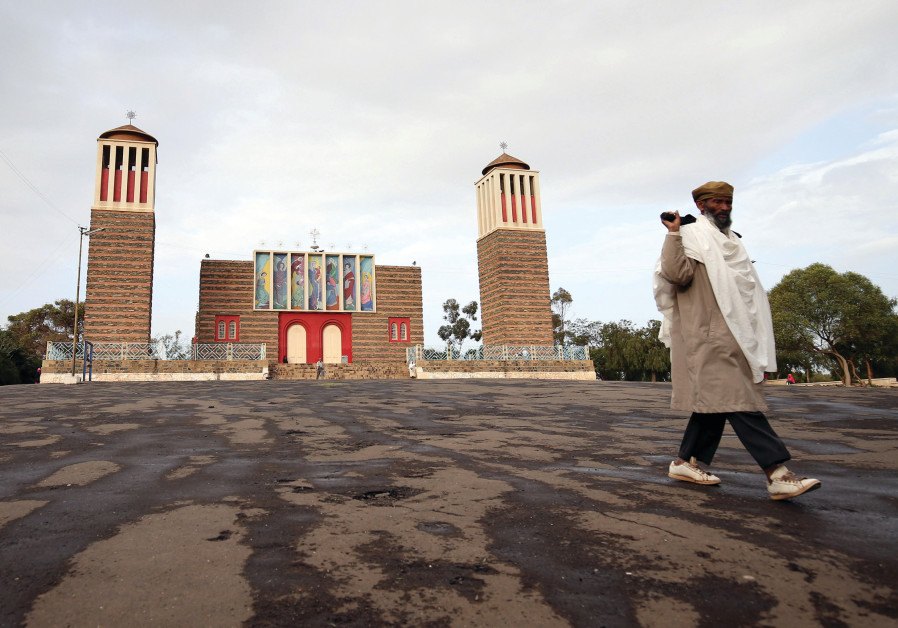
He is known by his people as His Holiness Abune Antonios. The 94-year-old prelate is the patriarch of the Eritrean Orthodox Church and has been imprisoned by Eritrea’s President Isaias Afwerki for the past 13 years. Last month in the Oval Office, US President Donald Trump was told of his suffering as part of a conference on religious persecution. Here is the story of his people’s enslavement, brutal suffering and fear, fully sanctioned by the international community.
Hopes ran high when Eritrea won its independence from Ethiopia in 1993. Instead, Eritrea has become not only one of the poorest countries on Earth, but labeled the “North Korea of Africa,” one of the most hostile and repressive regimes toward all religions.
Despite the enslavement by the military of about one in every 15 citizens with indefinite military service – which the UN described as “crimes against humanity” – last year the United Nations Security Council unbelievably lifted biting sanctions against Eritrea and its leadership. This was despite there being no improvement in Eritrea’s human rights record and without it releasing Antonios and thousands of religious prisoners. Christian leaders are imprisoned and tortured in Eritrea, and yet the Trump administration did not use its veto in the UN Security Council to pressure for their release. This can be corrected by the president immediately through an executive order freezing the assets of President Afwerki and his ruthless generals until these faith leaders and people of faith across the entire spectrum are freed.
The premature lifting of the UN sanctions last year was prompted by misplaced optimism after Eritrea and Ethiopia signed a peace agreement after 20 years of bloody war and hostilities. The state of war with Ethiopia was the pretext for lifetime forced conscription of its citizens. The treaty has been signed now for over a year, yet conscription has not been scaled back to its original 18-month limitation. Eritrea’s human rights record is actually deteriorating while its international standing, and the personal fortunes of its leader and his generals, are improving.
Indeed, the government has taken over the Eritrean Orthodox Church and is now run by dictates of the country’s national security agency and the Department of Religious Affairs, an arm of the government. Many of the leading lights of the Eritrean Orthodox Church and any clergy deemed to sympathize with the imprisoned patriarch have been languishing in prison, some since 2014.
Recently, with a tidal wave of support to the imprisoned patriarch, priests, monks and deacons, including five monks from the historic monastery of Debre Bizen, have been rounded up and imprisoned.
Earlier this summer, the military closed down 22 Roman Catholic medical centers. It had already closed down the only Catholic seminary, and is gunning next for the schools and nurseries, many in the least developed regions of the country. Indeed, a staggering two-thirds of the people live below the poverty line, largely because of government repression, incompetence, under-investment in the agricultural sector, enslavement for state purposes of working-age men and women, and a culture of fear that stymies any entrepreneurship.
And due to the complicity of the international community in allowing the widespread arrests, religious repression and state-sponsored slavery, Western nations have already absorbed hundreds of thousands of Eritrean asylum-seekers, and there will be many more. President Trump can only turn off the refugee tap from Eritrea to the United States and our Western allies by fixing the piping at the source, which can be achieved by organizing with our allies the freezing of the assets of Eritrea’s leaders and demanding the release of the religious leaders.
Meanwhile, the dictator’s personal fortunes have improved, with his assets unfrozen by the UN and now greater international investment in the country’s mining sector, which benefits from state-sponsored slave labor.
The prime minister of Ethiopia has released thousands of political prisoners and journalists in the past year, and Eritrea should follow with a grand gesture by September 12, the Geez New Year.
Otherwise, the US should lead the international community on freezing the assets of President Afwerki and his generals until the influential patriarch, His Holiness Abune Antonios, and the other religious and political prisoners, are released; state-sponsored slavery eliminated; and the military conscription reduced to back to its original 18 months. Let’s bring Patriarch Antonios to the Oval Office by the Geez New Year for a photo with President Trump, rather than just sympathetically hear his case and have it disappear, like the tens of thousands of prisoners in the country’s jails. And then let’s welcome him to the Holy Land on pilgrimage.
Fr. Athanasius Ghebre-Ab, PhD, is professor of history at the University of Cincinnati and a parish priest in the Eritrean Orthodox Church. Yosef I. Abramowitz is a green-energy impact investor in Africa and can be followed @Kaptainsunshine.

August 28, 2019( KHARTOUM) - The streets of Port Sudan were calm on Wednesday after the resumption of intercommunal clashes on Tuesday evening in some residential area of the Red Sea coastal town.
The city has been the scene of days of fighting during which firearms and white arms were used in ethnic violence. Last week the intercommunal clashes lasted from Thursday until Saturday evening.
Sudanese authorities, on Tuesday, sent for the second time additional military reinforcements from the Rapid Support Forces (RSF) to the eastern Sudan city to control the security situation an put an end to the clashes between the Beni Amer and Nuba residents.
Eyewitnesses told "Sudan Tribune" that calm returned to the city on Wednesday, after a night of tension in the town as a result of renewed skirmishes between the two parties on Tuesday evening.
They confirmed that the burning of houses - free of residents - on Tuesday evening affected several houses in the neighbourhoods of Riyadh, Dar Al-Naeem and the Al-Mattar.
On the other hand, security sources confirmed the arrival of RSF troops to be deployed in the troubled areas to establish security.
The Central Committee of Sudan doctors (CCSD) announced on Monday that the clashes of Port Sudan left 37 dead and dozens of injuries.
The report said that the hospital emergency departments in Port Sudan received 126 injuries ranging from mild to moderate, and the critical injuries requiring surgical intervention were transferred to Osman Dagna Hospital.
The Red Sea Governor, Major General Essam Abdel Farraj, and the State Director of the Intelligence Service have been relieved by the Sovereign Council on Sunday after their failure to control the crisis.
(ST)
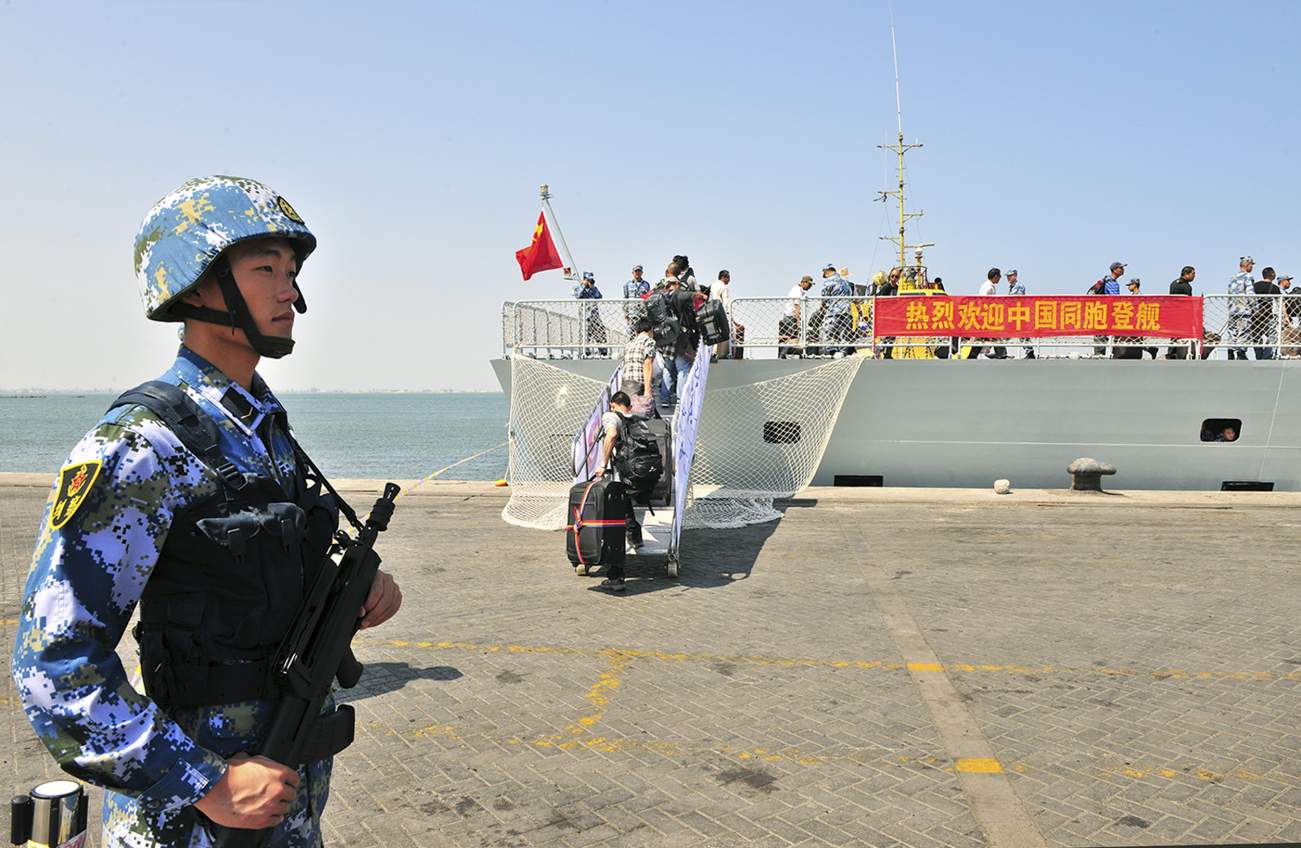
What goes around comes around, however. To date, China has tolerated the presence of its geopolitical competitors in Djibouti, and the Djiboutian government has been happy to leverage its location to collect rents from as many outside powers as possible. But, not every investor in Djibouti is equal. China has financed a water pipeline for Djibouti, as well as a railroad to Addis Ababa, the capital of Ethiopia. While U.S. aid to Djibouti peaked at $31 million in 2017, a Chinese company signed a preliminary $4 billion natural gas deal with Djibouti that same year.
That aid disparity might be enough to tip the scales toward deference to Beijing’s interests, but Djibouti’s corruption makes a tilt toward China—should Chinese authorities demand it—more likely. Djibouti has had only two leaders since its independence—Hassan Gouled Aptidon ruled the country with an iron fist for the first 22 years after its independence. Upon his death, his nephew and handpicked successor Ismaïl Omar Guelleh took over, and has run the country ever since. Corruption remains a major problem in the country, with few deals able to proceeds without Guelleh or his relatives personally benefiting, if not in bribes then in business contracts which any Western country would consider a conflict of interest.
With time, however, U.S. military planners expanded U.S. access to facilities in Romania and Bulgaria, as well as northern Jordan in order to offset reliance on an increasingly erratic Erdoğan. While the Pentagon continues to double down on Qatar, nearby Bahrain could provide an alternative. Not only does it host the U.S. Fifth Fleet but, during Operation Desert Storm, Bahrain’s Isa Air Base hosted four times more American planes that Qatar’s Al Udeid Air Base does now.
regardless, is not exclusive. Berbera is a deep-water port able to accommodate most U.S. ships.
Rather than risk American security and interests, Secretary of State Mike Pompeo, Assistant Secretary of State Tibor P. Nagy, Jr., and U.S. Ambassador to Somalia Donald Yamamoto should recognize that military ties have never equated to formal diplomatic recognition: Just ask Syrian Kurds, Iraqi Kurds, or Taiwan. In both the Middle East and East Asia, however, a generation of officials recognized that they should prioritize American security and defense above more mundane and tendentious concerns.
Michael Rubin is a resident scholar at the American Enterprise Institute.
Source=https://nationalinterest.org/feature/it’s-time-pentagon-finds-alternative-djibouti-75966

Source: Somali Affairs
The Federal Government of Somalia transported 200 young men from the Aden Ade International Airport in Mogadishu to Eritrea yesterday morning.
The information received by Somaliaffairs says that the youth were part of 600 young men the government had been gathering in Shirbow in the past few days.
The plan is to have these young men, when they return from Eritrea, to secretly operate in Mogadishu and replace the (Shield and Spear) Force.
Their training in Eritrea is being kept secret but they will replace the existing force for heavy operations.
Security experts we asked about this issue say the development carries great risk for the country’s security, especially in Mogadishu, and that an already existing force is being destroyed.
Source=https://eritreahub.org/eritrea-is-secretly-training-somali-forces-report


