


 Young Kubrom Andom recounted the root cause of the suffering and displacement of Eritreans and urged every Eritrean to play a role in the ongoing struggle to remove a cancerous regime in our country. Kubrom Andom added: “Make contacts with everyone around you in Germany. There is no fear of political activism here; we need to use our presence here to create friends for our struggle. We need everyone’s help because we cannot do the job in isolation”. He also briefed the meeting on other recent events like a public meeting in Germany in which the supporters of the regime were exposed and shamed for their sympathies to the regime and had to leave a meeting with disgrace.
  Ms Feven Gideon spoke about the importance of peaceful demonstrations at any place and time, and explained the 22 November demonstration in southern Germany against the regime and its agent associations like the so-called Eritrean women’s association. She stressed the ever building force of the opposition against the dictatorial regime in Asmara which is gradually but surely losing ground at all levels. Ms Feven predicted that those Eritreans still half-heartedly supporting the regime will join the forces of justice and democracy in the very near future.
  On his part, Mr. Nigusse Tseggai presented a summary of recent activities by the EPDP in several parts of the globe. He said the already isolated PFDJ regime is being continually affected by what we in the opposition camp are doing to shorten its days in power, and that our activities must be intensified without a let up. The Party leadership member also explained the significance of latest activities by Party leadership members in Germany, Australia, Switzerland and other regions of the world.
  Veteran freedom fighter Yebio Kinfe talked about the exeplary role of Eritrean youth in the struggle for national liberation, and reminded the new Eritrean generation that it has no other choice but the repeat the determined struggle expected from youth to save Eritrea from the home-grown oppression. He furtehr urged the meeting participants to strongly advise their peers still sympathizing with the regime to abandon it and join the forces fighting for change to a better Eritrea.

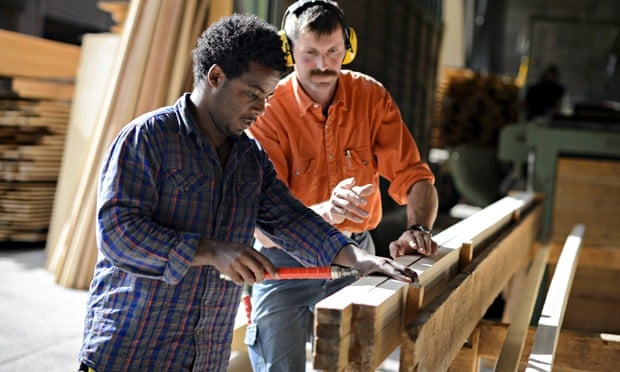
The number of Eritreans seeking asylum in Europe has nearly tripled over the past year as mainly young refugees stream out of one of the world’s most secretive countries, fleeing an “open-ended” national service programme, soaring food prices and dire job prospects.
After Syrians, Eritreans are the most common nationality to arrive on European shores so far this year, comprising 22% of all people entering Italy by boat, according to the United Nations High Commissioner for Refugees (UNHCR).
Nearly 37,000 Eritreans applied for asylum in 38 European countries over the first 10 months of this year, compared to about 13,000 in the same period last year, UNHCR reported. Sweden, Germany, Switzerland and the Netherlands have fielded the most asylum applications from Eritrean refugees. “The recognition rate of [Eritreans] asking for asylum in Europe and industrial countries is actually quite high – it’s between 80 and 90%,” said a UNHCR spokesperson.
Rising food prices and a lack of basic services have made Eritreans desperate to leave, said Meron Estefanos, an Eritrean activist based in Sweden. “Life is getting too expensive, people are starving. It’s really hard to find clean water, there is almost no electricity in the city, it’s just getting harder and harder.
“Before, people knew where they wanted to go – they would plan in Sudan or in Libya where their final destination would be – but they don’t care any more. In almost every European country there is an increase in Eritrean [asylum seekers].”
About 90% of the Eritrean refugees who arrived in Ethiopia during the month of October are aged between 18 and 24, according to UNHCR. People fleeing the country say that renewed efforts by Eritrea’s government to enlist young people in the army has forced many to leave in pursuit of education and work abroad, according to Gruijl. “[The refugees] are seeing a stronger drive to recruit people into the national services – some of these services include military service. Even though officially it’s four and a half years, quite often it’s open-ended for the people.”
UNHCR reported more than 1,200 Eritrean refugees had fled into Ethiopia in the first week of November alone.
The UNHCR spokesperson said: “The harsh economic situation is clearly another reason [people flee Eritrea], as well as the round-ups and the reintensification of people being forced into these national services. According to the people we spoke to, there is now even an extra effort to get people who were previously deemed unfit for military service: school dropouts, children who have gotten their education degree at the end of grade 11 – they are now being targeted for these national services.”
In a press statement issued on 20 November, Eritrea’s ministry of foreign affairs said: “What is conveniently glossed over here is the fact that the mandatory, 18-months … national military service is prolonged solely because of Ethiopia’s occupation of sovereign Eritrean territories and its continued belligerence in breach of international law.
“The UNHCR itself has become, for over 10 years now, an unwitting catalyst in bolstering the pull factors by invariably categorising all Eritrean migrants as ‘prima facie asylum seekers’. In the event, it is odd for the UNHCR to issue intermittent statements or shed crocodile tears ‘on the increasing number of Eritrean asylum seekers’.”
Eritrea’s long-serving president Isaias Afewerki has dismissed claims that his country will implode as its young people flee in droves. “I don’t think there are things we are missing because [refugees] are leaving. Those with impressionable hearts cannot contribute anything in the country because their hearts are somewhere else,” he said in a February address on state television.
Reports that Eritreans have been forcibly returned after fleeing to neighbouring Sudan have been met with concern from UNHCR, who “recommend that people are not returned to Eritrea,” Gruijl said.
On 20 November, the UN announced that the commission of inquiry into human rights abuses in Eritrea – established in response to rising migration out of the country – had begun its operations.
Sheila Keetharuth, the UN’s special rapporteur on the situation of human rights in Eritrea and a member of the commission, said: “I have had the opportunity to speak to many Eritreans who have fled their country. I am not surprised that the number of Eritreans choosing this path keeps increasing – simply because I have not seen authorities committing to changing the root causes of this exodus. My work has highlighted the lack of rule of law, breaches of fundamental rights, with scores of reported cases of extrajudicial executions, enforced disappearances, arbitrary detention and torture in detention – all of which give reasons to Eritreans to flee. The protracted national service, under conditions that often turn it into forced labour and create a fertile ground for other violations, is another compelling one.
“The commission of inquiry that is starting its work today, and of which I am a member, will have the resources and expertise to look into all these reported violations in greater depth and detail. I am convinced that this will allow it to come up with an objective, compelling report on the situation of human rights in Eritrea today.”
Meron said Eritreans are hopeful that change might come after decades of oppression at the hands of their government: “We see what’s happening throughout the world, we’ve seen Burkina Faso – that gives us hope. For now, this regime has to go.”
• This article was changed on 24 November to clarify that 90% of the Eritrean refugees who arrived in Ethiopia, not in Europe, were aged between 18 and 24.

 “His name may, for sure, mean nothing to you (the reader). Yet, this Eritrean priest who lives in Erlinsbach (Swiss Canton of Solothurn), and viewed by some people as a future Nobel Peace Prize winner, is a hero. Since 2003, through repeatedly sending his mobile telephone number to all directions, he has saved thousands of lives of migrants lost between Africa and Italy by informing coast guards about their situation. These contributions give him the legitimacy to have enjoined recently at law court to Europe to come out of its ‘logic of militarized fortress’”.


