Police examine claims that embassy in London uses threats and coercion to collect recovery and reconstruction tax that allegedly funds African militants

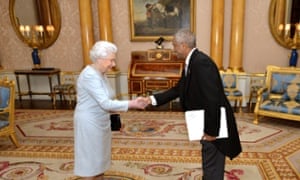
The Queen shakes hands with Estifanos Habtemariam the new ambassador of Eritrea, during a private audience at Buckingham Palace on 17 February 2015.

The Queen shakes hands with Estifanos Habtemariam, the new ambassador of Eritrea, during a private audience

at Buckingham Palace on 17 February 2015. Photograph: WPA Pool/Getty Images

The Metropolitan police are examining allegations that the Eritrean embassy in London is illegally using a controversial diaspora tax to “punish and control” Eritreans living in the UK, it has emerged.

The Eritrean government has been criticised repeatedly over its use of the 2% recovery and reconstruction (RRT) tax it levies on the earnings of Eritreans abroad.

In December 2011, a UN security council resolution (pdf) called on Eritrea to “cease using extortion, threats of violence, fraud and other illicit means to collect taxes outside of Eritrea from its nationals or other individuals of Eritrean descent”.

The same resolution accused Eritrea of using the tax to destabilise the Horn of Africa, saying some of the revenues were funding armed opposition groups in the region, including the militant group al-Shabaab.

Accusations that Eritrea was supporting the Somali group as a means of attacking its long-standing enemy, Ethiopia, had prompted the security council to impose an arms embargo on the country in 2009.

Concerns that the Eritrean embassy in London is using coercion or illicit means to collect the tax – such as refusing diaspora members basic consular services if they fail to pay it – have led the Foreign and Commonwealth Office (FCO) to raise the matter with the Eritrean authorities on at least four occasions over the past four years.

In May 2011, the FCO notified the Eritrean ambassador that aspects of the diaspora tax may be unlawful and in breach of the Vienna Convention on Diplomatic Relations, adding: “The ambassador was told that, until it was demonstrated otherwise, the embassy should suspend, immediately and in full, all activities relating to the collection of the tax.”

The Eritrean embassy says it no longer collects the tax in London. But UK-based Eritreans claim the tax is still being raised illegally – though they say the London embassy now requires it to be paid on their behalf in the Eritrean capital, Asmara.

One Eritrean attempting to conclude his affairs in the country last year was told by the embassy that he needed to pay £350 in Eritrea, and that nothing would be settled without full payment of the fee, which included a £200 charge for the Eritrean military.

In March, a group of Eritreans reported the matter to the police and sent a dossier of allegations to the Met commissioner, Sir Bernard Hogan-Howe.

Although Scotland Yard has not launched a formal investigation, officers from the Met’s parliamentary and diplomatic protection department are understood to be examining the dossier.

“The Metropolitan police service have been contacted by members of the Eritrean community regarding the alleged illegal extraction of taxes by their embassy,” said a Met spokesman. “Officers are assessing the information provided to them to establish whether any offence has been committed.”

The Foreign Office also said it was aware “of allegations over the use of harassment to collect revenue from members of the Eritrean diaspora in the UK”. A spokeswoman said that while the FCO did not believe the collection of taxes was illegal, “use of harassment and blackmail could be and we encouraged diaspora members with allegations of this kind to raise their concerns with the police”.

Noel Joseph, a UK-based Eritrean human rights activist, said the government in Asmara was using the tax to hold the diaspora to ransom.

“Basically, anything you need from the state – if you want to write a will or get a power-of-attorney for your family or to send parcels home or get a passport – you need a clearance document and you do not get the document without paying the 2% tax,” he said.

“It’s punishing people and exerting control. The message is: no matter how far you’ve gone, we will always find a way of affecting your life.”

It's punishing people … The message is: no matter how far you've gone, we will always find a way to affect your life

Noel Joseph

Joseph said the Eritrean government was now trying to head off international scrutiny of the tax by instructing members of the diaspora to pay it in Asmara.

Calling on the UK and the international community to show “will and determination” in investigating the allegations, he added: “What the Eritrean government is doing is illegal – and they’re clearly flouting it – so they need to take drastic action. Eritrea needs to learn its lesson; it cannot just behave as it is. It’s against the law.”

The Eritrean embassy described the allegations as “baseless, ongoing, deliberate and distorted” and said the Eritrean government had never used coercive methods or intimidation to collect the tax.

Advertisement

“Although Eritrean tax evaders residing in the country are legally charged and convicted for their failure to comply with the taxation law, Eritreans residing abroad are not legally bound by this regulation,” it said in a statement.

“Eritrean citizens that fail to pay the 2% RRT however, are subject to administrative measures such as the ‘denial of business licence, land entitlement and other services’. This does not include basic consular services. These measures are not considered ‘extortion, coercion or intimidation’ by international law.”

A UN report published this week suggested that the Eritrean government’s systematic use of extrajudicial killing, torture, rape, indefinite national service and forced labour may amount to crimes against humanity.

The 500-page investigation by the UN commission of inquiry on human rights in Eritrea catalogued a litany of human rights violations by the “totalitarian” regime of President Isaias Afwerki “on a scope and scale seldom witnessed elsewhere”.

It also accused the government of using a programme of imprisonment, forced disappearance, surveillance and censorship to create a culture of permanent fear and crush all dissent.

Source=http://www.theguardian.com/global-development/2015/jun/09/eritrea-diaspora-tax-uk-investigated-metropolitan-police

في الخامس والعشرين من مايو 2015م عقد وفد حزب الشعب الديمقراطي الارتري المكون من كلٍّ من الأخ الرئيس/ منقستئاب أسمروم ومسئول العلاقات الخارجية الأخ/ ولد يسوس عمار والأخت/ آديام تفرَّا عضو إدارة مكتب الشؤون التنظيمية والأخ/ محاري تسفاماريام عضو إدارة مكتب العلاقات الخارجية، عقد الوفد اجتماعاً جماهيرياً مفتوحاً بمدينة روتردام الهولندية.

Rotterdampublicmeeting 1     

الأخ/ محاري تسفاماريام افتتح الاجتماع معرفاً الجمهور بأعضاء الوفد وموضحاً أن الاجتماع سوف يتناول الأوضاع الارترية الراهنة علي كل الأصعدة بالإضافة لتناول موضوع حضور الوفد ومشاركته في لقاء أحزاب التحالف التقدمي الأممي.

الأخ/ منقستئاب أسمروم رئيس الحزب في البدء هنأ المجتمعين وسائر الشعب الارتري بذكرى الاستقلال ثم شرح الأوضاع المزرية داخل الوطن بالإضافة الي تناول للعمل المشترك لكل القوى الارترية المحبة للديمقراطية والاستقرار في ارتريا.

Rotterdampublicmeeting 3

مسئول العلاقات الخارجية الأخ/ ولد يسوس عمار تناول بإسهاب أنشطة الحزب الدبلوماسية وما يواجهها من تحديات. ثم تناول قضية اللاجئين والمهاجرين الارتريين ومجهودات الحزب في تخفيف معاناة ومآسي أولئك اللاجئين.

Rotterdampublicmeeting 4

الأخت/ آديام تفرَّا تناولت موضوع وشعار الملتقى الأممي لتحالف الأحزاب التقدمية والذي كرس أعمال ملتقاه هذا لموضوع مساواة الجنس عملاً لا قولاً. حديث تفرا اشتمل علي كثافة المشاركة في ذلك الاجتماع، الموضوعات التي نوقشت في الملتقى، ما صدر عنه من قرارات، هذا فضلاً عن تناولها لمشاركة وفد الحزب في الملتقى وتحركاته وأنشطته فيه.

Rotterdampublicmeeting 5

عقب ذلك أتيحت الفرصة للأسئلة والاستفسارات والتعليقات من الحضور، حيث تدفقت علي المنصة أسئلة وتحليلات وتعليقات عميقة وغنية أثرت الاجتماع وأعطته لوناً وطعماً فريداً. كما أوصى المجتمعون الوفد بالاستمرار في عقد مثل هذه الاجتماعات التنويرية الشاملة والمهمة. وأنهى الاجتماع أعماله بالوقوف دقيقة حداد علي أرواح الشهداء.

Rotterdampublicmeeting 6

في السادس والعشرين من مايو 2015م التقى وفد حزب الشعب الديمقراطي الارتري المكون من كلٍّ من الأخ الرئيس/ منقستئاب أسمروم ومسئول العلاقات الخارجية الأخ/ ولد يسوس عمار والأخ/ محاري تسفاماريام عضو إدارة مكتب العلاقات الخارجية، التقى الوفد سكرتارية العلاقات الخارجية لحزب العمال الهولندي المكونة من تيم فونك ومكئيل برخت، حيث تناول معهما أنشطة الحزب وقضايا ومعاناة الشعب الارتري بالداخل والخارج.

Rotterdampublicmeeting 2

وفد الحزب ناشد المسئولين الهولنديين أن تدعم الدول الاوربية اللاجئين الارتريين المتواجدين باثيوبيا والسودان تعليمياً وفنياً وصحياً. وأن تقدم الدعم المادي والمعنوي للمنظمات السياسية والمدنية الارترية المعارضة المقيمة بالخارج، وأن ترعى حقوق اللاجئين الارتريين بها. كما ذكر الوفد أن تقديم الدعم للأنظمة الدكتاتورية يطيل من أعمارها ويضاعف مأساة ومخاطر تدفق سيل الهجرة واللجوء الي الغرب.    

 
OHCHR

GENEVA (8 June 2015) — The Government of Eritrea is responsible for systematic, widespread and gross human rights violations that have created a climate of fear in which dissent is stifled, a large proportion of the population is subjected to forced labour and imprisonment, and hundreds of thousands of refugees have fled the country, according to a UN report released Monday. Some of these violations may constitute crimes against humanity.

Citing an array of human rights violations on a scope and scale seldom witnessed elsewhere, the report by the UN Commission of Inquiry on Human Rights in Eritrea describes a totalitarian state bent on controlling Eritreans through a vast security apparatus that has penetrated all levels of society.

“Information gathered through the pervasive control system is used in absolute arbitrariness to keep the population in a state of permanent anxiety,” the 500-page report says. “It is not law that rules Eritreans – but fear.”

The release of the report comes as the international community, particularly governments in Europe, North Africa and the Middle East, struggles to cope with a growing exodus of refugees, asylum seekers and migrants across the Mediterranean and along other irregular routes. Many of them are Eritreans, a significant proportion of whom fall victim to human traffickers while trying to reach Europe. The UN refugee agency placed the number of Eritreans under its concern outside the country at more than 357,400 in mid-2014.

The report strongly urges continued international protection for Eritrean refugees fleeing human rights violations, and warns against sending them back to danger in a country that punishes anyone who tries to leave without permission.

“Faced with a seemingly hopeless situation they feel powerless to change, hundreds of thousands of Eritreans are fleeing their country,” the report says. “In desperation, they resort to deadly escape routes through deserts and neighbouring war-torn countries and across dangerous seas in search of safety. They risk capture, torture and death at the hands of ruthless human traffickers. To ascribe their decision to leave solely to economic reasons is to ignore the dire situation of human rights in Eritrea and the very real suffering of its people. Eritreans are fleeing severe human rights violations in their country and are in need of international protection.”

The commission of inquiry was established by the UN Human Rights Council in June 2014 to conduct an investigation of all alleged violations of human rights in Eritrea, including: extrajudicial killings; enforced disappearances; arbitrary arrest and detention; torture and inhumane prison conditions; violations of freedom of expression and opinion; freedom of association and assembly; freedom of religion and belief; freedom of movement; and forced military conscription.

The three-member commission is chaired by Mr. Mike Smith (Australia), with Mr. Victor Dankwa (Ghana), and Ms. Sheila B. Keetharuth (Mauritius), who also serves as the UN Special Rapporteur on the situation of human rights in Eritrea, as commissioners.

Announcing the release of the report Monday, Ms. Keetharuth urged renewed commitment from the international community to help end the climate of fear in Eritrea.

“With the end of the commission’s investigations and the publication of this report detailing our findings on human rights violations in Eritrea, I look forward to a renewed commitment by the international community to address the justice deficit and to support our call for a restoration of the rule of law,” she said. “Rule by fear – fear of indefinite conscription, of arbitrary and incommunicado detention, of torture and other human rights violations – must end.”

The commission is scheduled to formally present its report to the UN Human Rights Council on June 23 in Geneva.

Eritrean authorities ignored repeated requests by the commission for direct access to the country as well as for information. The commission travelled to eight other countries and carried out some 550 confidential interviews with Eritrean witnesses who had fled the Horn of Africa nation. In addition, it received some 160 written submissions.

The report says fear of reprisals, even among witnesses now in third countries, was a major challenge.

“Many potential witnesses residing outside Eritrea were afraid to testify, even on a confidential basis, because they assumed they were still being clandestinely monitored by the authorities and therefore feared for their safety and for family members back in Eritrea,” the report says.

The report notes that the initial promise of democracy and rule of law that came with Eritrea’s independence in 1991 has been extinguished by the Government under the pretext of national defence.

“The commission finds that systematic, widespread and gross human rights violations have been and are being committed by the Government of Eritrea and that there is no accountability for them,” it says. “The enjoyment of rights and freedoms are severely curtailed in an overall context of a total lack of rule of law. The commission also finds that the violations in the areas of extrajudicial executions, torture (including sexual torture), national service and forced labour may constitute crimes against humanity. The commission emphasizes that its present findings should not be interpreted as a conclusion that international crimes have not been committed in other areas.”

The report lists the main perpetrators of these violations as the Eritrean Defence Forces, in particular the Eritrean Army; the National Security Office; the Eritrean Police Forces; the Ministry of Information; the Ministry of Justice; the Ministry of Defence; the People’s Front for Democracy and Justice (PFDJ); the Office of the President; and the President.

The report describes the repressive systems used by the Government to control, silence and isolate individuals, including a pervasive domestic surveillance network in which neighbours spy on neighbours and even family members mistrust each other.

“As a result of this mass surveillance, Eritreans live in constant fear that their conduct is or may be monitored by security agents and that information gathered may be used against them, leading to arbitrary arrest, detention, torture, disappearance or death,” it says.

The judicial system in the country lacks independence and the administration of justice is “completely deficient,” the report says. Arbitrary detention is ubiquitous and conditions of detention in the country’s vast network of jails are extremely harsh. Holding prisoners incommunicado is a widespread practice, and many detainees simply disappear. In addition, many detainees have no idea why they are being held, nor of the length of their imprisonment.

“The commission finds that the use of torture is so widespread that it can only conclude it is a policy of the Government to encourage its use for the punishment of individuals perceived as opponents to its rule and for the extraction of confessions,” the report says. “Monitoring of detention centres is non-existent and perpetrators are never brought to justice.”

The report also describes how the Government, under the pretext of defending the integrity of the State and ensuring national self-sufficiency, has subjected much of the population to open-ended national service, either in the army or through the civil service. When they turn 18 or even before, all Eritreans are conscripted. While national service is supposed to last 18 months, in reality conscripts end up serving for an indefinite period, often for years in harsh and inhumane conditions.

Thousands of conscripts are subjected to forced labour that effectively abuses, exploits and enslaves them for years. Women conscripts are at extreme risk of sexual violence during national service.

Many others – detainees, students, members of the militia – are also subjected to forced labour: “The use of forced labour is so prevalent in Eritrea that all sectors of the economy rely on it and all Eritreans are likely to be subject to it at one point in their lives,” the report says.

“The commission concludes that forced labour in this context is a practice similar to slavery in its effects and, as such, is prohibited under international human rights law.”

END

Source=http://www.caperi.com/un-inquiry-reports-gross-human-rights-violations-in-eritrea/

The UN Commission of Inquiry released an advance report of its findings on Monday, 8 June, that the Eritrean government is still committing “systematic, widespread and gross human rights violations” against its own people and that some of these violations may constitute crimes against humanity.


Following is the full press statement of the Commission of Inquiry whose findings and reports will be discussed by the 47-member UN Human Rights Commission during the last week of this month when Eritreans from all walks of life are expected to be in Geneva on 26 June 2015 to ask for concrete measures by the UN Security Council and the international community against Africa’s most repressive regime in Asmara.

_____

UN GENEVA (8 June 2015) -- The Government of Eritrea is responsible for systematic, widespread and gross human rights violations that have created a climate of fear in which dissent is stifled, a large proportion of the population is subjected to forced labour and imprisonment, and hundreds of thousands of refugees have fled the country, according to a UN report released Monday. Some of these violations may constitute crimes against humanity.

Citing an array of human rights violations on a scope and scale seldom witnessed elsewhere, the report by the UN Commission of Inquiry on Human Rights in Eritrea describes a totalitarian state bent on controlling Eritreans through a vast security apparatus that has penetrated all levels of society.

“Information gathered through the pervasive control system is used in absolute arbitrariness to keep the population in a state of permanent anxiety,” the 500-page report says. “It is not law that rules Eritreans – but fear.

” The release of the report comes as the international community, particularly governments in Europe, North Africa and the Middle East, struggles to cope with a growing exodus of refugees, asylum seekers and migrants across the Mediterranean and along other irregular routes. Many of them are Eritreans, a significant proportion of whom fall victim to human traffickers while trying to reach Europe. The UN refugee agency placed the number of Eritreans under its concern outside the country at more than 357,400 in mid-2014.

The report strongly urges continued international protection for Eritrean refugees fleeing human rights violations, and warns against sending them back to danger in a country that punishes anyone who tries to leave without permission.

“Faced with a seemingly hopeless situation they feel powerless to change, hundreds of thousands of Eritreans are fleeing their country,” the report says. “In desperation, they resort to deadly escape routes through deserts and neighbouring war-torn countries and across dangerous seas in search of safety. They risk capture, torture and death at the hands of ruthless human traffickers. To ascribe their decision to leave solely to economic reasons is to ignore the dire situation of human rights in Eritrea and the very real suffering of its people. Eritreans are fleeing severe human rights violations in their country and are in need of international protection.”

The commission of inquiry was established by the UN Human Rights Council in June 2014 to conduct an investigation of all alleged violations of human rights in Eritrea, including: extrajudicial killings; enforced disappearances; arbitrary arrest and detention; torture and inhumane prison conditions; violations of freedom of expression and opinion; freedom of association and assembly; freedom of religion and belief; freedom of movement; and forced military conscription.

The three-member commission is chaired by Mr. Mike Smith (Australia), with Mr. Victor Dankwa (Ghana), and Ms. Sheila B. Keetharuth (Mauritius), who also serves as the UN Special Rapporteur on the situation of human rights in Eritrea, as commissioners.

Announcing the release of the report Monday, Ms. Keetharuth urged renewed commitment from the international community to help end the climate of fear in Eritrea.

“With the end of the commission’s investigations and the publication of this report detailing our findings on human rights violations in Eritrea, I look forward to a renewed commitment by the international community to address the justice deficit and to support our call for a restoration of the rule of law,” she said. “Rule by fear – fear of indefinite conscription, of arbitrary and incommunicado detention, of torture and other human rights violations – must end.”

The commission is scheduled to formally present its report to the UN Human Rights Council on June 23 in Geneva.

Eritrean authorities ignored repeated requests by the commission for direct access to the country as well as for information. The commission travelled to eight other countries and carried out some 550 confidential interviews with Eritrean witnesses who had fled the Horn of Africa nation. In addition, it received some 160 written submissions.

The report says fear of reprisals, even among witnesses now in third countries, was a major challenge. “Many potential witnesses residing outside Eritrea were afraid to testify, even on a confidential basis, because they assumed they were still being clandestinely monitored by the authorities and therefore feared for their safety and for family members back in Eritrea,” the report says.

The report notes that the initial promise of democracy and rule of law that came with Eritrea’s independence in 1991 has been extinguished by the Government under the pretext of national defence.

“The commission finds that systematic, widespread and gross human rights violations have been and are being committed by the Government of Eritrea and that there is no accountability for them,” it says. “The enjoyment of rights and freedoms are severely curtailed in an overall context of a total lack of rule of law.

The commission also finds that the violations in the areas of extrajudicial executions, torture (including sexual torture), national service and forced labour may constitute crimes against humanity. The commission emphasizes that its present findings should not be interpreted as a conclusion that international crimes have not been committed in other areas.”

The report lists the main perpetrators of these violations as the Eritrean Defence Forces, in particular the Eritrean Army; the National Security Office; the Eritrean Police Forces; the Ministry of Information; the Ministry of Justice; the Ministry of Defence; the People’s Front for Democracy and Justice (PFDJ); the Office of the President; and the President.

The report describes the repressive systems used by the Government to control, silence and isolate individuals, including a pervasive domestic surveillance network in which neighbours spy on neighbours and even family members mistrust each other.

“As a result of this mass surveillance, Eritreans live in constant fear that their conduct is or may be monitored by security agents and that information gathered may be used against them, leading to arbitrary arrest, detention, torture, disappearance or death,” it says.

The judicial system in the country lacks independence and the administration of justice is “completely deficient,” the report says. Arbitrary detention is ubiquitous and conditions of detention in the country’s vast network of jails are extremely harsh. Holding prisoners incommunicado is a widespread practice, and many detainees simply disappear. In addition, many detainees have no idea why they are being held, nor of the length of their imprisonment.

“The commission finds that the use of torture is so widespread that it can only conclude it is a policy of the Government to encourage its use for the punishment of individuals perceived as opponents to its rule and for the extraction of confessions,” the report says. “Monitoring of detention centres is non-existent and perpetrators are never brought to justice.

” The report also describes how the Government, under the pretext of defending the integrity of the State and ensuring national self-sufficiency, has subjected much of the population to open-ended national service, either in the army or through the civil service. When they turn 18 or even before, all Eritreans are conscripted. While national service is supposed to last 18 months, in reality conscripts end up serving for an indefinite period, often for years in harsh and inhumane conditions.

Thousands of conscripts are subjected to forced labour that effectively abuses, exploits and enslaves them for years. Women conscripts are at extreme risk of sexual violence during national service.

Many others – detainees, students, members of the militia - are also subjected to forced labour: “The use of forced labour is so prevalent in Eritrea that all sectors of the economy rely on it and all Eritreans are likely to be subject to it at one point in their lives,” the report says.

“The commission concludes that forced labour in this context is a practice similar to slavery in its effects and, as such, is prohibited under international human rights law.”

Full report and supporting documentation END Media contacts: Ron Redmond: This email address is being protected from spambots. You need JavaScript enabled to view it.; Rolando Gómez: +41 22 917 9711+41 22 917 9711, This email address is being protected from spambots. You need JavaScript enabled to view it.; Cédric Sapey: +41 22 917 9695+41 22 917 9695, This email address is being protected from spambots. You need JavaScript enabled to view it.

Upsala New Newspaper 4th Jun 2015

Rezenepic

ደገፍ ኤውሮጳዊ ሕብረት ንኤርትራ ይቐየር፡ ንደለይቲ ፍትሒ መታን ከርብሕ

ኣብ ዝሓለፈ ሰሙናት ንኤውርጳ ንምብጻሕ ዝፈተኑ ማእለያ ቁጽሪ ዘይብሎም መርከብ ዝተጸዓኑ ንደላሎን ንዘይሕጋውያን መሰጋገርቲ ዘይተመጣጠነን ዘይምዕሩይን ክቡር ዋጋ ከፊሎም ብዘይንቡር ዝተጓዕዙ ሰባት ኣብ ማእከላይ ባሕሪ ሂወቶም ስኢኖም።

ዝዓበየ ቁጽሪ'ዞም ስደተኛታት ክንበር ካብ ዘይከኣል ከቢድ መነባብሮ ሂወትን ኣብ ኤርትራ ንስደት ዘምርሑ'ዮም። ኣብኡ ብምሕሱም ምልከት ዘመሓድር መንግስቲ፡ ብዲክታቶሪያዊ ኢሰያስ ኣፈወርቂ ቅድሚ 25 ዓመት ኣብ ሓርነታዊ ተጋድሎ ዝተቃለሰ ዝምራሕ'ዩ።

ነጻነት፡ ሰብኣዊ ክብርን መሰልን፡ ደሞክራስን ኣይመጽኤን እንታይ ደኣ፡ ብኣንጻሩ'ዩ

መንእሰይ ኤርትራ፡ ገደብ ዘይብሉ ወታሃደራዊ ኣገልግሎት ክገብሩ ዝተገደዱ፡ ንመዓልቲ ትሕቲ $ 2 (ትሕቲ ክልተ ዶላር)፡ ንመናበሪኦም ይኽፈሎም። ድሕሪ ነጻነት ዝተነድፈን፡ዝጸደቐን ቅዋም ኣይተተግበረን። ወታሃደራውያን መራሕቲ፡ ሰበ ስልጣናት መንግስቲ ተኣሲሮም። ሓሳብካ ምግላጽን፡ ነጻ ጋዜጣን ዘይብላ ሃገር ከኣ'ያ።

ሽወደን-ኤርትራዊ ዳዊት ኢሳቕ ብዘይ ክስን ፍርድን ቅድሚ ብዙሕ ዓመታት ኣብ ማእሰርቲ ይርከብ። ምልካዊ ስርዓት ንተጻረርቱን ነቐፍቱን ኣሲርሉ ዘሎ ቦታ ዘስካሕክሕን፡ ዘይሰብኣዊ ብጨካን ኣተሓሕዛ፡ እሱራት ኣብ ሕማቕ ኩነታት ዝርከብሉ ብቀረባ ዓይኒ መሰኻኽር ዝገልጹ፡ መን ኣበይ ተኣሲሩ፡ ህሉዉን ምዉቱን ዓለም ዘይትፈልጠሉ'ዩ።

ቤት ምኽሪ ውድብ ሕቡራት መንግስታት ሽማግለ ንሰብኣዊ መሰላት፡ ኣብ'ዚ ቀረባ እዋን ብኩነታት ኤርትራ ዘካየዶ መጽናዕቲ፡ ብዕለት 16 መጋቢት 2015 ጸብጻባ ኣቕሪባ። ውድብ ሕቡራት መንግስታት ንሰብኣዊ መሰል ክትምርምር ዝመዘዛ ሽማግለ ኤርትራ ንኸይትኣቱ ስለ ዝተኸልከለት፡ ንኣስታት 500 ዝዀኑ ኤርትራውያን ስደተኛታት መሰኻክር ኣዘራሪባ።

እቶም መርማሪት ሽማግለ ዘዛረበቶም ኤርትራውያን መብዛሕትኦም ንመጻኢ ተስፋ ከም ዘይብሎም ዝገለጹ'ዮም። መጻኢ ዕድሎም፡ ኣበይ ከም ዝነብሩ፡ ሞያ፡ መርዓን መውስቦን፡ እምነቶም ኣብ ኣገደስቲ ውሳኔታቶም ምርጫ ከም ዘይብሎም፡ መረዳእታ ዘይርከበሉ ኣብ ልዕሊኦም ዝወረደ ግፍዒ፡ ሰብኣዊ መሰሎም ዝተነፍጎምን ናይ'ዚ ግዳይ ተምክሮታት ዘለዎም ብዙሓት'ዮም።

ዕላውን ዘይዕላውን፡ ኣብ ልዕልን ትሕቲ መሬት ማእሰርቲ ኣሎ። ኣብ'ዚ ማእሰርትታት ከኣ ብርቱዕ መቅጻዕትን ስቓይን ኣለዎ። ይኹን'ምበር ነዚ ጸረ ሰብኣዊ ክብርን መሰልን ተግባራት ገበናት ዝፈጸመ ተሓታቲ ንፍርዲ ዝቐረበ የለን።

እቶም ዝተሰደዱ ሰባት ኣብ ዝተፈላልያ ሃገራት ይነብሩ ኣለዉ። ገገለ ካብኣቶም ኣብ ሽወደን ይነብሩ። ክፋል'ዞም ስደተኛታት ብምኽንያት ዶባዊ ግርጭት ኤርትራ-ኢትዮጵያ ድሕሪ ነጻነት ኤርትራ 1991 ዝወጹ እዮም። ሎሚ ከኣ ብሰንኪ መላኺ ስርዓት ይወጹ ኣለዉ። ኣብ 2000 ዓ.ም ኩነታት ኤርትራ ኣብ ኣዝዩ ዝሓመቐ ደረጃ ወዲቑ፡ ኣብ ዓለም ብዙሕ ቁጽሪ ኤርትራውያን ኣብ ትሕቲ ዑቕባ ይርከብ። ኣብ'ዚ ፋሕ'ሉ ዘሎ ህዝቢ፡ ንመሪርን ሓደገኛ ጉዳይ ኤርትራ መታን ክውዳእ እንታይ ክንገብር ኣሎና ዝብሉ ዝተፈላልዩ ምትእኽኻባትን ውዳበታትን ኣሎ።

ካብ'ዚ ውዳበታት ሓደ ሰልፊ ዲሞክራሲ ህዝቢ ኤርትራ፡ ኣብ መጽሔት ሓርነት ወርሒ ግንቦት ዝወጸ ሕታም፡ ሕብረት ኤውሮጳ ንመንግስቲ ኤርትራ ዝመደቦ ሓገዝ ኣመልኪቱ ዘጽኦ ቕሬታ፡ ደገፍ ኢውሮጳዊ ሕብረት ንመሐየሊ መላኺ ስርዓት፡ በቲ ሓደ ሸነኽ ከኣ ንሰብኣዊ ክብርን መሰልን ዲሞክራስን ዓቓፊ'ዩ በሃልቲ እዮም።

ካልኦት ሓይልታት ምስ ርእይቶን ሓሳብ ሰ.ዲ.ህ.ኤ ይሰማምዑ

ንመጀመሪያ ግዜ ኣይኮነን ሎሚ ኤውሮጳዊ ሕብረት ንመንግስቲ ኤርትራ ገንዘብ ዝሰልዕ ዘሎ። ድሕሪ ዶባዊ ግርጭት ኤርትራን ኢትዮጵያን 1998 ኤውሮጳዊ ሕብረት ምኽንያት ረኺቦም ሓባርዊ ስራሕ መደብ ዕብየት ምስ ኤርትራ ክደፍእሉ ጀሚሮም።

ብተመሳሳሊ 2009 ንዝተሰልዐ ሓገዝ ቅድሚ ኣብ ውሳኔ ምብጽሑ፡ ኤውሮጳዊ ሕብረት ላዕለዋይ ኮሚሽን ጉዳይ ሰብኣዊ መሰል ኣተሓሕዛ ሰባት ኣብ ኤርትራ ኣዝዩ ኣብ ሕማቕ ኩነታት ከም ዘሎ ጽሒፉ፡ እዚ ኩነታት እንተደኣ ተማሓይሹ ጥራሕ'ዩ ቁጠባውን ማሕበራውን ምዕባለ ክረጋገጽ ዝኽእል ዝብል እምነት ነይሩ።

ብዕለት 15 ሚያዝያ 2015 ላዕለዎ ሰበ ስልጣን ኤውሮጳዊ ሕብረት ወኪል ጉዳያት ወጻኢ፡ፖለቲካዊ ጸጥታን ሓላፊት ዝዀነት ወ/ሮ ፈደሪካ ሞርጋኒ ሓገዝ ኤውሮጳዊ ሕብረት፡ ነቲ ስርዓት ኩነታት ሰብኣዊ መሰላት ንክመሓየሽ ዝግበር ጸቕጢ'ዩ ክትብል ኣብ'ቲ ንሰልፊ ዲሞክራሲ ህዝቢ ኤርትራ ዝሰደደቶ መልእክቲ ጠቒሳ። ግን ዝዀነ ምምሕያሽ ዛጊት ኣይተራእየን።

ኣብ 2015 ዓ.ም ንርከብ። ካብ ምልኪ ብምህዳም ነበርቲ ህዝቢ ኤርትራ ቁጽሮም ካብ ግዜ ንግዜ እንዳወሓደ መጺኡ ኣሎ። ንሕና ልክዕ ከም ሰልፊ ዲሞክራሲ ህዝቢ ኤርትራ፡ ኤውሮጳዊ ሕብረት ካብ ማንም ግዜ ንላዕሊ ሎሚ ሓገዝ ጠጠው ከብል ኣለዎ ንብል። ምኽንያቱ ከኣ ንሰብኣዊ ክብሪ መሰል ዝሕለወሉ ምምሕያሽ ዝመርሕ ወይ ዘምጽእ ብዘይምዃኑ።

ኤውሮጳዊ ሕብረት፡ ኣባላት መንግስታት፡ ረዲኤታዊ ማሕበራት ንደሞክራስን ሰብኣዊ ክብርን መሰላትን ንዝሰርሑ ብዝበለጸ ክሕገዙ ከም ዘለዎም እኹል ፍልጠት ኣለዎም። ንሕና ከም ሰ.ዲ.ህ.ኤ እዚ ኣፍልጦ'ዚ ግድን ክስርሓሉ ዘለዎን ንኤርትራ ከኣ ዘዋጽእ እዩ።

ብዝሒ ትምህርታዊ ወፍሪ ኣብ ታሕተዋይ ደረጃ፡ ሞያዊ ስልጠና ወይ'ውን መሰረታዊ ኣካዳሚያዊ ትምህርቲ፡ ነቶም ብኣማኢት ኣሽሓት ኣብ መዕቆቢ ስደተኛታት ምብራቓዊ ሱዳን፡ ኢትዮጵያን ንዝርከቡ ምሕጋዝ ካብ'ቲ ብዙሕ ሓደ ኣገባብ'ዩ። ከም መረዳእታ ቤት ትምህርቲ ወዲ ሸሪፈይ ከሰላ ሱዳን ዝርከቡ ብድሩት ምንጪ ንመሰረታዊ ፍልጠትን ትምህርትን ክቐስሙ ዝቃለሱ ንዘለዉ ህጻናት፡ ኣብ ከም'ዚ ዝብለ ኩነታት ንዝርከቡ ወይ ንዝነብሩ ሰባት ምሕጋዝ፡ ድሕሪ ምውዳቕ መላኺ ስርዓት ተሳትፎ ኣብ ህንጻት መጻኢ ዲሞክራሲያዊ ስርዓት እግሪ ንምትካል ክሕይል ግድነት ክዳለዉን ክድልድሉን ይግባእ።

ብምኽንያት መጠን ዘይብሉ ሰብኣዊ በደላት ኣብ ኤርትራ፡ ንብዙሕ ዓመታት ሓገዛት ጠጠው ዘበላ ሃገራት ሓያሎ'የን። ነዚ ዓይነት መደብ ከኣ ሰፊሕ ደገፍ ዝግብኦ'ዩ።

ትጽቢታትና፡ ሽወደን ኣብ ኤውሮጳዊ ሕብረት ንኤርትራ ንዝወሃብ ሓገዝ፡ ክትጸልዎን ክትሰርሓሉን ከም'ቲ ልዕሊ ኢሉ ዝተጠቕሰ ኣገባብ፡ ምምሕያሻት ዝተኸተለ መስመር መልሲ ዝርከበሉን፡ ብቀሊሉ ብተግባር መላኺ ስርዓት ኣብ ልዕሊ ህዝቢ ዘዘውትሮ ቀጻሊ ግፍዒ ጭቆና ዘፋዅስ ክኸውን ይኽእል።

ዮሬል ሴቭቦሪ ሉንድግሬን... ኣባል እምነት ምድግጋፍ

ረዘነ ተስፋጽዮ                   ኣባል ባይቶ ሽወደን ነበር

ካር ሊንድበሪ                   ኣባል ምምሕዳር ወረዳ ኡፕሳላ

ቦ ንይሉንድ                     ዶ/ር ኤች ኣር ቲኦሎ

ሲግበርት ኣክሰልሶን         ፕሮፌሶር ኢ ኤም

Up to 3,400 migrants rescued off Libya coast in a single day as navies from European nations run massive rescue mission.

07 Jun 2015 01:40 GMT

Up to 3,400 migrants have been rescued off the coast of Libya, as navies from a number of European countries launched a massive rescue operation in the Mediterranean Sea.

Fifteen rescue operations were carried out in the last 24 hours. Ships from the British, Irish, Italian and German navies have been involved in the operations.

"Migrants are being brought back to southern Italy. About 100 migrants arrived in Lampedusa earlier, and some more are headed to the ports of Palermo and Trapani city in Sicily," Al Jazeera's Hoda Abdel-Hamid, reporting from the Italian island of Lampedusa, said.

"We don't know when the rest will be arriving, because it's simply a logistical nightmare for Italian authorities as many of them are ending up on mainland Italy," she said.

The European navies as part of the Triton Mission rescued migrants from nine wooden fishing boats and six rubber dinghies, our correspondent said.

One million migrants

British authorities have warned that up to 500,000 people could attempt the perilous crossing this summer.

Captain Nick Cooke-Priest, on the British warship HMS Bulwark, told reporters onboard: "Indications are there that there are 450,000 to 500,000 migrants in Libya who are waiting at the border" for voyage from the North African country's Mediterranean coast in hopes of reaching Italian shores.

There is an uptick in the number of migrants leaving the Libyan coast on weekend. If we compare the number of migrants leaving at this point compared to the last year, there is a radian increase of 30 percent, Al Jazeera's Abdel-Hamid said.

"There are an estimated one million migrants waiting in Libya to cross the sea. These arrivals are an indication that it could be a very busy summer for all the ships that are patrolling the Mediterranean," she said.

Nearly 1,800 migrants are thought to have drowned attempting to make the crossing since the start of this year, including some 800 in one sinking that was the biggest maritime disaster in the Mediterranean since World War II.

That disaster prompted European governments to significantly increase search and rescue operations between Italy and North Africa but they have been unable to agree on a longer-term strategy to ease the migration crisis.

Watch Hamid's previous reports on board the Italian patrol boat: Witnessing rescue efforts for Mediterranean migrants and Rescued migrants reflect on desperate journeys to European waters.

Source: Al Jazeera

ISIL militants are believed to have kidnapped 86 refugees

Militants fromIslamic State of Iraq and the Levant(Isil) are believed to have kidnapped 86 Eritrean refugees from a smugglers' caravan in westernLibya.

ADVERTISING

The militants struck at dawn on Wednesday morning, stopping the vehicle before separating Christian refugees from their Muslim counterparts, according to Meron Estafanos, the co-founder of the Stockholm-based International Commission on Eritrean Refugees.

Many of the refugees – among them 12 women – were forced to lie about their faith. Those who claimed to be Muslim were grilled on their knowledge of the Koran, as well as their prayer habits.

Wednesday's kidnapping bears chilling echoes of asimilar incident in April when Isil militants kidnapped 79 Eritrean and Ethiopian Christian refugees. Days later, more than thirty of the men were beheaded or shot dead in scrubland while young survivors were forced to watch.

Details of Wednesday's attack will emerge in the coming days as a handful of escapees tell their stories. At least nine men were able to dive silently from the back of the jihadists' speeding truck.


A group of Eritrean refugees walk along a railway line into central Calais

According to Mrs Estafanos, who has spoken to some of the men, the hostages mostly hail from the Eritrean town of Adi Keyih. "Those who escaped are in the middle of nowhere right now and we need to get them to a safer place – but it is hard while there are no NGOs there, no one able to help," said Ms Estafanos.

"If it is known they were taken by (Isil), no one will protect them."

After formally announcing the establishment of three Isil-run "provinces" across Libya, the jihadists are solidifying their grip over chunks of territory through a mix of spectacular violence and strict implementation of their clerics' rulings.

This is at least the third time in three months that Eritrean migrants in Libya have been targeted by the militants. Reports emerged earlier this week that two Eritrean refugees has been shot dead after the jihadists stopped a truck carrying 75 African migrants. Once again, the passengers were separated according to their faith before the killings were carried out.

Twenty two per cent of people entering Italy by boat in 2014 were from Eritrea, according to the UN, a statistic prompted by "ruthless repression" in their home country.

Rights abuses perpetrated by Eritrea's government, coupled with dismal economic prospects, are driving hundreds of people out of the country every day, according to an interim report by the UN's commission of inquiry on human rights in Eritrea.

Source=http://www.telegraph.co.uk/news/worldnews/islamic-state/11655543/86-Eritrean-migrants-kidnapped-by-Isil-in-Libya.html


|  01 JUNE 2015


An extraordinary meeting of the SI Migrations Committee was held in Rabat on Monday 1st June, to focus on a social democratic response to the migrations crisis unfolding in different parts of the world. The meeting took place at the Moroccan Parliament, hosted by the Socialist Union of Popular Forces, the USFP.
The Committee, chaired by Habib el Malki (USFP), focused on three key themes: a. Asylum seekers and migrants fleeing conflict and violence: the obligation of the international community to save and protect; b. The moral and humanitarian responsibility to address the plight of migrants escaping poverty and hunger; and c. Building a response to the current crisis based on our values and principles.
Driss Lachguar, First Secretary of the USFP, addressed the opening session. He highlighted the need for a roadmap to develop a comprehensive new approach to today’s migrations phenomenon which is not only due to economic factors but also a consequence of the ideology inherited from the cold war, fuelling instability and insecurity, and the correlation with arms merchants and those who finance terrorism. He emphasised the diversity of Morocco with its Moorish and Jewish heritage from immigration in the 16th century and regretted the lack of a medium or long term strategy by today’s government in Morocco to effectively deal with this problem.
The meeting also heard a contribution from Driss El Yazami, from the National Council of Human Rights in Morocco who outlined the mutations in migrations over recent decades. He emphasised the current diverse nature of migrants, including those with university degrees and today’s high number of women and children, and pointed out that today all countries in the world are affected and all are countries of departure. He also highlighted that the use of migration as a tool for political campaigns should be a subject of debate, as well as the key issue of international governance and the rise of xenophobia.
The SI Secretary General, in concluding the opening session, recalled the point that human history has shown that migration is a source of wealth both economically and culturally and in today’s crisis too many people are being denied fundamental rights and too many states are not respecting them. The level of injustice today is immense, bearing in mind the millions displaced by wars, conflicts, persecution, famine and economic hardship. He particularly underlined the need, in facing this crisis, to act in accordance with the values that unite our movement and constitute our identity, and to work for political and human solutions rather than to rely on the use of force.
Outlining the tasks ahead, the Committee chair emphasised the urgent need to come up with a plan of action; to agree on a diagnosis of the situation in different parts of the world to identify the true causes of the circumstances in order to deal with the origins rather than the consequences; to treat the migrations phenomenon as a symptom of the chaos and institutional destruction we see in many states; to seek solutions other than military ones that are repressive; and to take a fresh look at the concept of security, placing people at the center.
As a specially invited guest, Tun Khin, a Rohingya activist recognised internationally, made a presentation on the history and plight of the Rohingya people, an ethnic group in Burma who are denied nationality. Of a population of 3.5 million, more than1.5 million have been forced to flee their homeland in Burma due to persecution and violence against them. Presently, 8,000 Rohingya people are stranded on boats at sea, being turned away from neighbouring countries. He stressed the importance of addressing the root cause of this displacement of his people.
During the discussions, it was recalled that although the focus was currently on the plight of migrants at sea, migration was also a matter of crossing the desert where many people in Africa died. While emphasising the benefits of migration, it was pointed out that migration itself was not the problem, it was illegal migration that needed to be addressed. There was also a perceived need to bridge a link between migration and development and to adopt programmes for the transfer of technology to stimulate development where needed. Globalisation and the IT revolution had been expected to bring progress, but in some cases it had brought terror, wars, tanks and more deaths. Greater political efforts were required by the international community to work towards liberating oppressed peoples. With regard to Europe, the need to share the burden was emphasised as well as the need to urgently act to save lives.
Formulating an approach that is gender based was underlined, bearing in mind the high number of female migrants and their particular vulnerability to abuse.
At the conclusion of its discussions, the Committee adopted a Declaration and agreed to continue advancing with the Charter of the Rights of Migrants, whose elaboration had begun at previous meetings, with a view to presenting it for adopton at the next Council of the Socialist International due to take place at the United Nations headquarters in New York on 6-7 July. The objective of the Charter is to provide a code of conduct for political action by member parties.
 
DECLARATION
Original: Spanish
  1. Migration is a global phenomenon that affects all countries on all continents.
  2. Migrants are first and foremost human beings and, as such, they have rights.
  3. Crisis situations and acute conflicts in various regions of the world are producing a tragic and irreversible loss of innocent lives among victims of situations that are not of their making. Given the increasing number of tragedies of this kind, the Migration Committee has decided to convene urgently to discuss the situation and call for immediate action.
  4. The Socialist International hopes to find comprehensive, lasting and fair solutions that might resolve the root causes of forced migration.
  5. However, the Socialist International is aware of the urgent moral imperative to act to stop the human bloodshed that undermines the basic foundations of social order.
  6. The Socialist International Migrations Committee urges all its member parties to stand true to their principles and to act decisively in circumstances in which neutrality or indifference are not an option.
  7. We must reject solutions to humanitarian crises that are founded on a logic of force or based exclusively on maintaining security. We also reject the criminalisation of migrants. In their precarious situation, they cannot, under any circumstances, be considered guilty of their situation.
  8. We socialists must be guided by the principles and values that we share as socialists: respect for the dignity of all people, equal rights and opportunities and the pursuit of justice in all actions: there is no greater or more urgent political aim than that of safeguarding these principles.
  9. We urge socialist Governments and Party representatives at all levels immediately to put forward effective initiatives committing themselves to act with all their strength and resources to stem the loss of human lives resulting from illegal migration.
  10. Agreement and commitment must be sought between the various States, both in regional institutions and in the context of the United Nations, but the responsibility of individual States cannot wait or be dependent on the existence of these supranational agreements or undertakings.
  11. States not only have an obligation to comply with international law, under the treaties and conventions to which they are party, but also the unavoidable moral duty to act without delay to save human lives who depend on actions and decisions that are within their reach.
  12. The Socialist International wants to highlight the case of victims of the situations covered by the 1951 Convention and to urge all signatory countries to comply with it scrupulously. 
  13. The case of the Rohingya people in Burma requires the international community as a whole, and the neighbouring countries in particular, to take responsibility for protecting these people, persecuted as they are in their place of origin, while lacking any international protection to stop the oppression to which they are subjected or even the slightest degree of solidarity that might provide them with a safe haven. The Socialist International urges the Burmese authorities to cease all forms of persecution of the Rohingya people, to recognise their nationality and the human rights to which they are entitled.
  14. The people of Sub-Saharan countries are being affected by armed conflicts, as well as social and gender conflicts and extreme poverty. Emigration is the only escape for many of these people. While the media spotlight is focused on Mediterranean crossings, the new geopolitical map of migration flows shows that the majority of these migrants travel to other African countries. The Socialist International urges socialist parties in the region to strengthen their immigrant protection policies to guarantee their safety and respect for their rights.
  15. Countries such as Morocco are an example of a transit country which has become a destination country for many, the authorities of which have sought to establish a policy of acceptance and integration.
  16. On numerous occasions, immigrants whose final destination is Europe are subject to abuse by people trafficking networks, whose greed and ruthlessness lead them into situations where their lives are put at risk. The Socialist International urgently calls upon all policy makers to fight these criminal organisations, but also to use all means to prevent the loss of any more lives. It is also a priority to address the different causes, prospects and solutions in an honest dialogue involving European and African political leaders, in order to find global, fair and lasting solutions to the crises that are causing forced migration.
  17. In addition to the actions taken directly by States, organisations like the UNHCR, which devote their efforts to caring for millions of refugees and victims of conflicts, urgently need more financial resources to meet their growing needs. Therefore, we call upon all States to contribute jointly to meeting these unavoidable costs.
  18. At its next meeting, which will take place at the United Nations headquarters in New York on 6th and 7th July, the Socialist International will discuss the adoption of international undertakings of a global nature, which will include the adoption of a Charter of the Rights of Migrants, which will become a mandatory code of conduct for political action by its member parties.

EPDP Magazines